





This article has been translated from English to Gen Z Slang.
The Exponential Moving Average (EMA) is like the cool version of a moving average (MA) that vibes more with what's popping off right now in terms of prices than the old stuff. 😎
The Exponential Moving Average (EMA) also goes by the Exponential Weighted Moving Average (EWMA), ‘cause it’s got fancy names, too!
The EMA is kind of like the Simple Moving Average (SMA), as they both vibe-check the trend direction over time. ⏳✨
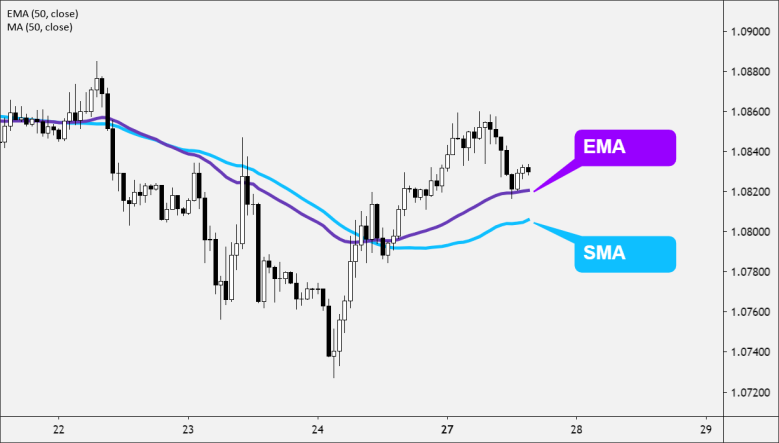
The main diff between SMA and EMA? The EMA is all about putting more clout on the recent price data, while SMA is just your average Joe averaging out the prices. 🔥
The way EMA does its math magic lets it keep up with prices way more closely than your basic SMA can.
This makes the EMA way more in tune with the freshest price moves than the SMA is. 🚀
How to Use Exponential Moving Averages (EMA)
Use the EMA to get the tea on the trend’s direction and roll with it. 💯
- When the EMA levels up, think about putting a ring on it (buy) when the price gets near or just below the EMA.
- When the EMA takes a dip, consider yeeting (sell) when the price climbs towards or just above the EMA.
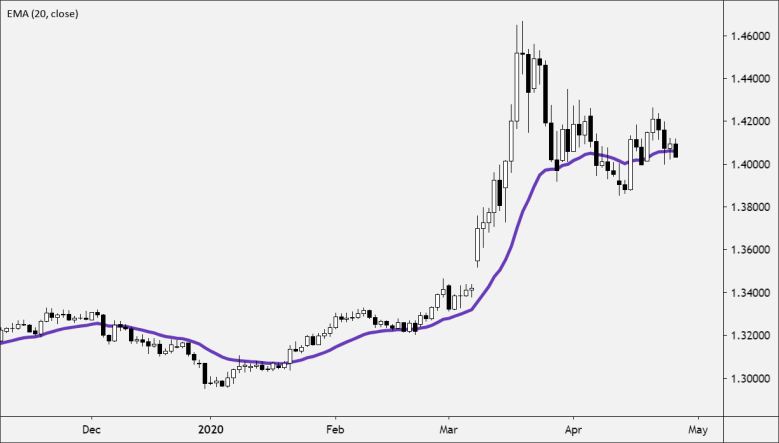
Moving averages can also spill the tea on support and resistance areas. 😏
- A glow-up EMA tends to back up the price action.
- A chillin’ EMA tends to resist the price action.
This backs up the move of snagging when the price is near the rising EMA and ghosting when the price is near the falling EMA.
Like all moving average indicators, Exponential Moving Averages are perfect for trending markets. 📈✨
- When the price is in beast mode and keeps climbing, the EMA line will show it's rising too.
- When the price is in the emo phase and keeps sinking, the EMA line will have that same energy going down.
- Keep an eye on the EMA line’s slope and momentum (how it's changing from one candle to the next).
Moving averages, including the EMA, are not here to tell you exactly where the tops and bottoms are in a trend. 😅
Moving averages help you vibe in the general direction of a trend, but there's a bit of lag in triggering entry and exit points. 🕒
When using the same period, the EMA's got that shorter lag than the SMA. ⚡
How to Calculate EMA
Notice how the EMA pulls from its past EMA vibes in calculating, including all the price data in its current mood. 📊
The freshest price data flex the most on the EMA, with the ancient data just barely showing up. 😆
EMA = (K x (C - P)) + P
Where:
C = Current Price
P = Prior period's EMA
K = Exponential smoothing constant
The smoothing constant K gives clout to the fresh price data by setting the right weight, based on the periods specified. 🤓