

Canada is printing its labor market numbers this week! Thing is, it’s not the only market mover. Here’s a list of potential catalysts!
IVEY PMI (Jan 7, 3:00 pm GMT)
- Traders consider the PMI as a leading indicator for Canada’s labor market numbers
- The IVEY PMI jumped to a three-month high of 60.0 in November
- The better-than-expected release boosted CAD in the first hour or two before price went back to its intraday trends
- Analysts expect December’s PMI to improve to 60.2
Labor market numbers (Jan 10, 1:30 pm GMT)
- Unemployment rate jumped from 5.5% to 5.9% in November, as the economy shed a net of 71,200 from both part-time and full-time worker pools
- CAD dropped across the board and stayed low until the end of the day
- Markets see Canada’s unemployment rate improving from 5.9% to 5.8% and expect that a net of 31,700 jobs will be added in December
- Take note that the more closely watched U.S. NFP reports will be printed at the same time as Canada’s data
Oil price trends
- CAD has been more resilient against USD and JPY compared to the other comdolls
- U.S.-Iran tensions could keep crude oil (and CAD) supported until we see risk-friendly updates
Technical snapshot
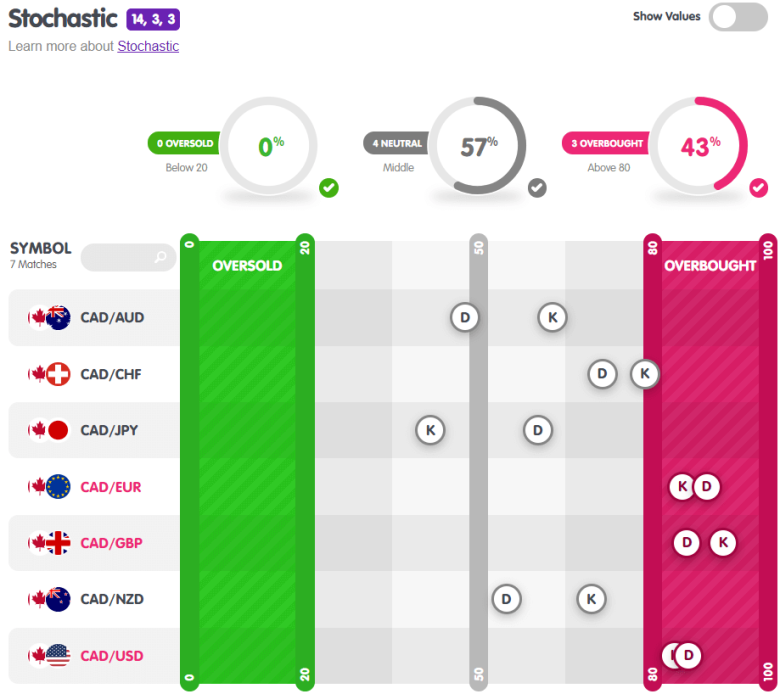
- Stochastic considers CAD as “overbought” against EUR, GBP, and USD on the daily time frame
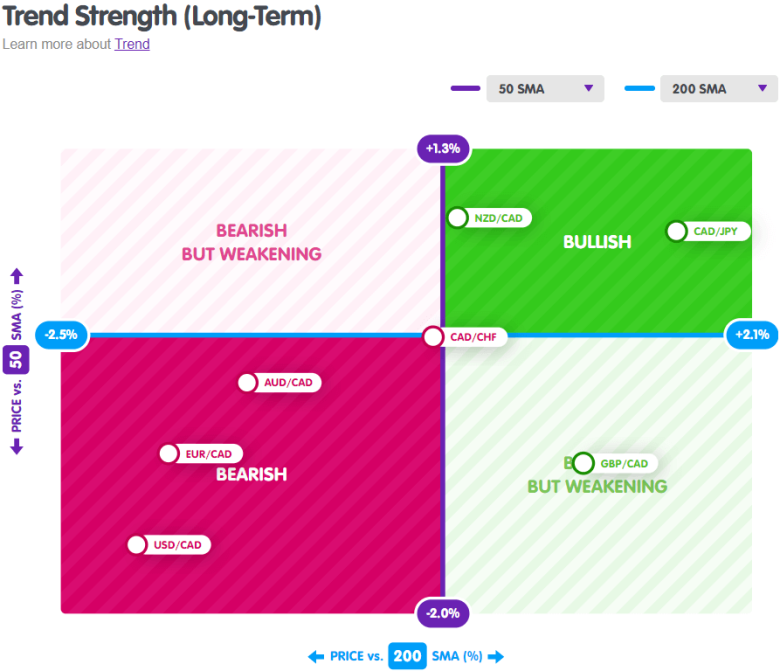
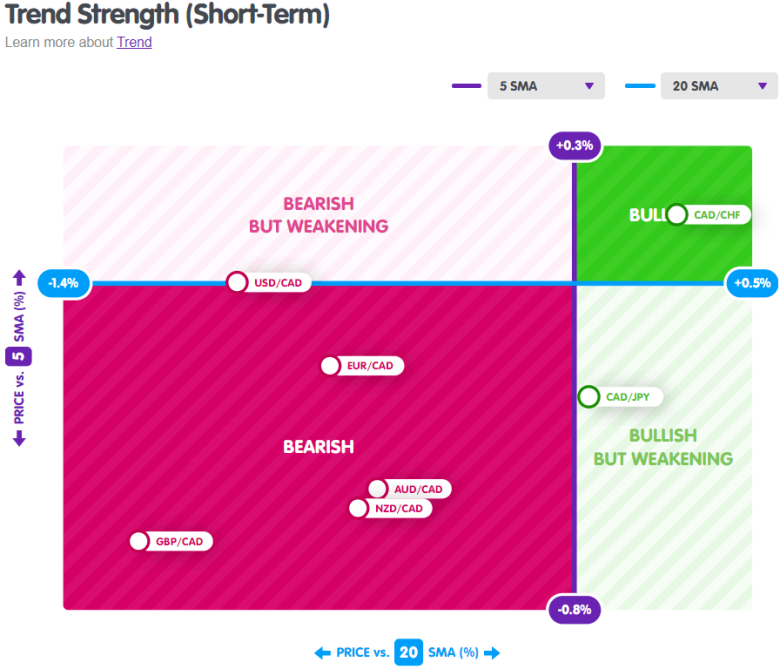
- GBP/CAD is “bullish but weakening” on the long term frames and “bearish” on the shorter time frames. Consider a potential reversal or retracement on the daily