





This article has been translated from English to Gen Z Slang.
Pivot points, or as we like to call 'em, pivots, are all about finding where an asset's price likes to chill or freak out by checking out its highs, lows, and closing vibes. 📊
They're clutch for spotting trade ranges, sussing out trend flips, and getting a feel for the vibes of the market. 🤔
When it comes to the grind, there are loads of ways to calculate pivot points, fam. 🔢
The popular route's all about averaging out a high, low, and closing price over a period, and then slapping it on your trading range like a mood ring. ✨
The magic formula for finding the pivot is like this:
Pivot = (High + Low + Close) / 3
Once you snag that pivot, it's your go-to for building up four levels of support and resistance:
Resistance 1 = (Pivot * 2) - Low
Resistance 2 = Pivot + (High - Low)
Support 1 = (Pivot * 2) - High
Support 2 = Pivot - (High - Low)
Pivot points are the Swiss Army knife of trading, mostly used to tell if the game's trending or locked in a range. 🛠️
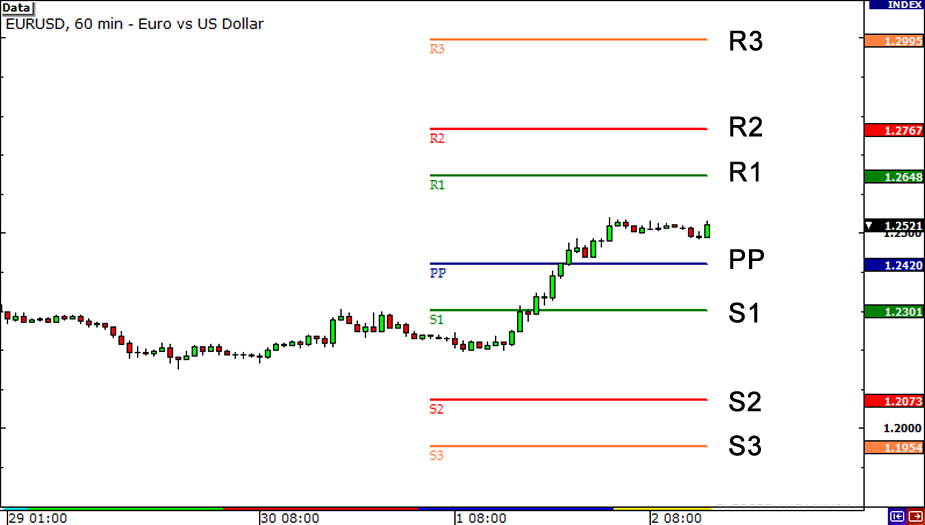
Pro tip: If the price is rolling above resistance levels, we got a bullish vibe. 🚀
If it's lurking below support levels, it's giving off bearish vibes. 🐻
But if it's just cruising between them, then it means the market's in a chill range-bound mode. 😎
Pivots are your bread and butter for setting up support and resistance levels with zero drama. 🍞