If yesterday’s CPI was a warning shot, today’s PPI is the follow-through. The Producer Price Index (PPI) climbed 1.1% month-over-month in May 2026 — blowing past the 0.7% gain economists had forecast. The annual rate surged to 6.5% year-over-year, its hottest reading since November 2022. Here’s the part that should really get traders’ attention: while energy was again the loudest culprit, core inflation — the measure that strips out food, energy, and trade margins — just posted its biggest monthly jump since 2022. In other words, the inflation story is no longer just about the pump.
U.S. PPI May 2026: Key Takeaways
- Headline PPI: +1.1% month-over-month in May 2026 (seasonally adjusted), beating the Dow Jones consensus forecast of +0.7%; April’s reading was revised down to +1.1% from the initially reported +1.4%
- Annual rate: +6.5% year-over-year (unadjusted) — the largest 12-month gain since November 2022’s +7.4%, and up sharply from April’s revised +5.7%
- Final demand goods: +2.8% month-over-month — the largest single-month advance since the BLS launched this data series in December 2009
- Gasoline wholesale prices surged 23.4% in May, accounting for more than half of the total goods-category increase; diesel fuel, jet fuel, and industrial chemicals also rose
- Core PPI (final demand less foods, energy, and trade services): +0.8% month-over-month — the biggest single-month gain since March 2022; up +5.1% year-over-year
- Final demand services slowed to +0.3% in May, down from +0.7% in April — the one number in the report that wasn’t alarming
- Pipeline inflation is building: prices for processed goods used in production jumped 3.5%, and unprocessed goods for intermediate demand surged 4.9% — costs that haven’t reached consumers yet, but are on their way
What Were the U.S. PPI Results for May 2026?
The Bureau of Labor Statistics (BLS) reported this morning that the Producer Price Index (PPI) — a measure of the prices that domestic producers receive for their goods and services — rose 1.1% month-over-month in May 2026 on a seasonally adjusted basis. That’s a significant beat above the Dow Jones consensus forecast of 0.7%, and it matched April’s revised pace (April was originally reported at 1.4% but was revised lower to 1.1% in today’s release). On a year-over-year basis, the unadjusted PPI was up 6.5% — the hottest annual reading since November 2022, and a clear acceleration from April’s revised 5.7%. This report lands one day after Wednesday’s Consumer Price Index (CPI) print, which showed consumer prices up 4.2% year-over-year in May. Together, the back-to-back inflation reports are telling the same story: energy-driven price pressure is running hot at every level of the economy — and it is not cooling down on its own.
Promoted: Is Your Small Account Holding Your Strategy Back?
Trading $100 isn’t the same as trading $100k. Emotional discipline & trading flexibility is easier when you have the right backing. FTMO is a global prop firm with a 4.8★ rating on 40K+ reviews, serving traders since 2015! No time limits. Free trials. Up to $200K in Demo Capital.
Start a free trial with FTMO!
Disclosure: To help support our content, we may earn a commission from our partners if you sign up through our links, at no extra cost to you.
Why Are U.S. Producer Prices Rising So Fast?
Short answer: gasoline, gasoline, and more gasoline. Final demand energy prices jumped 10.7% in May, and almost 80% of the total monthly gain in final demand prices traced back to goods prices alone. Within goods, gasoline wholesale prices surged 23.4% — by itself responsible for more than half of the entire goods-price increase. Diesel fuel, jet fuel, plastic resins and materials, and industrial chemicals all moved higher too. The root cause is the ongoing conflict with Iran and the effective closure of the Strait of Hormuz — the narrow waterway through which roughly 20% of the world’s oil normally flows. With that critical chokepoint disrupted, global energy markets remain under persistent upward pressure. Pork prices fell 10.1% and residential electric power also declined, but those were minor offsets against a surge of this scale. Think of it this way: right now, Iran’s conflict with the U.S. is doing more to set U.S. producer prices than any Federal Reserve policy decision.
Is the “It’s Just Energy” Excuse Running Out of Gas?
This is the question that matters most for the Federal Reserve right now — and today’s data gives a concerning answer. The most closely watched “core” PPI measure — final demand less foods, energy, and trade services (this strips out the volatile categories to show the underlying trend) — rose 0.8% month-over-month in May. That is the largest monthly gain for this measure since March 2022. Over the past 12 months, core PPI is up 5.1% year-over-year — its biggest annual gain since October 2022. Think of core PPI as the inflation reading with the drama removed.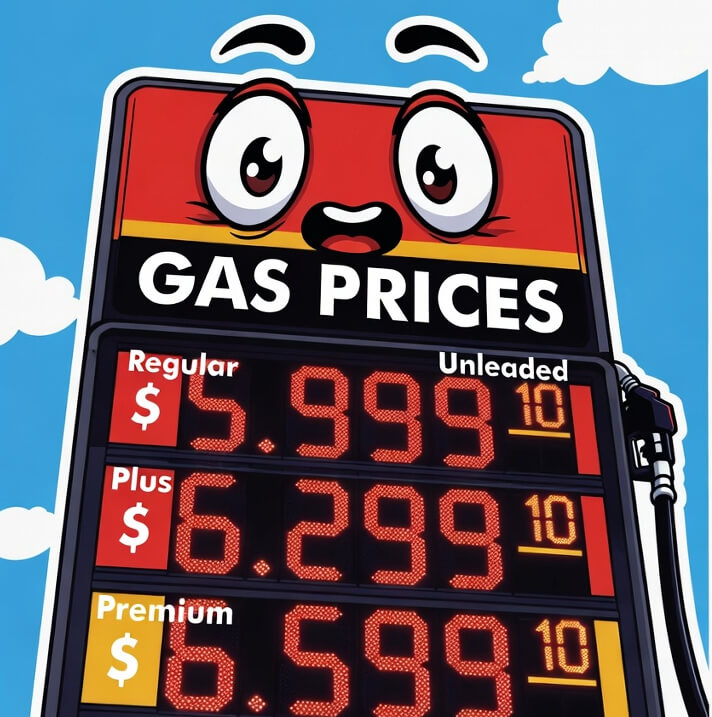
When it accelerates, that’s not just an oil story anymore. Pipeline pressure is also building fast: processed goods used in intermediate production rose 3.5% in May, and unprocessed goods jumped 4.9%. Those are materials that businesses buy to make other products. Costs moving through the supply chain now tend to show up in consumer prices weeks or months later. Compare that to yesterday’s CPI: headline consumer inflation came in at 4.2% annually — mostly energy — but core CPI was a more contained 2.9%. The 2.2 percentage-point gap between core PPI (5.1%) and core CPI (2.9%) tells you that businesses are still absorbing a chunk of their rising costs rather than passing them fully to consumers. That buffer won’t last forever.
What Does Chair Warsh Do Now? The Fed’s First Real Test
The Federal Reserve currently holds its benchmark rate at 3.50%–3.75%, and the next policy decision is just six days away on June 17. Markets widely expect rates to stay on hold at that meeting — and that hasn’t changed. But today’s PPI beat makes the road beyond June 17 look a lot more complicated for new Fed Chair Kevin Warsh, who took over from Jerome Powell in May and chairs his first FOMC meeting next week. Fed funds futures now lean toward a rate hike — not a cut — as the more likely year-end move. The inflation data piling up makes it nearly impossible to argue for rate cuts: hot April PPI, hotter CPI, now another PPI beat. At the same time, hiking into an energy-shock-driven economy is risky. If the Iran conflict resolves and oil prices fall sharply, much of this inflation could disappear quickly — and a premature hike would be hard to explain. Warsh’s tone at Wednesday’s press conference will tell traders a lot about whether the Fed is leaning hawkish or treating this as a temporary energy problem. That’s the moment to watch.
What Does This PPI Report Mean for USD Traders?
The stronger-than-expected print is broadly USD-positive. A hawkish Fed — one that hikes rates or signals it might — tends to attract capital into U.S. dollar assets because investors earn more holding dollars than other currencies. The U.S. Dollar Index (DXY) had already been testing the 100 level this week, supported by strong jobs data and safe-haven demand tied to the geopolitical backdrop. Today’s PPI adds more fuel to that trade. The key risk for dollar bulls: the 6.5% annual rate is overwhelmingly energy-driven. A ceasefire or diplomatic breakthrough with Iran that reopens the Strait of Hormuz could send oil — and PPI — sharply lower in a hurry, potentially reversing the dollar’s recent gains just as fast. EUR/USD and GBP/USD traders should treat June 17 as the bigger catalyst. Chair Warsh’s first press conference as Fed chief will either validate the hawkish repricing markets have done since April — or walk it back. Either way, it moves the dollar.
Frequently Asked Questions About U.S. Producer Prices
What does the Producer Price Index (PPI) measure?
The PPI measures the average change over time in the prices that domestic producers — businesses, manufacturers, and service providers — receive for their output. It is published monthly by the U.S. Bureau of Labor Statistics. Unlike the CPI, which measures what consumers pay at the store, the PPI measures prices earlier in the supply chain — before goods reach shoppers. Think of it as the CPI’s early-warning system: when producer prices rise, consumer prices often follow.
Why does PPI matter for forex traders?
PPI matters because it shifts Federal Reserve rate expectations — and rate expectations move currencies. When PPI rises more than expected, traders read it as a sign inflation may stay elevated, reducing the chance of rate cuts and raising the risk of hikes. Higher U.S. interest rates tend to strengthen the dollar versus lower-yielding currencies like the euro or yen. Surprises in either direction can move USD pairs quickly, especially when the print lands close to an FOMC meeting — as it does right now.
What happened with U.S. PPI in May 2026?
The PPI for final demand rose 1.1% month-over-month in May 2026, beating the Dow Jones consensus forecast of 0.7%. The year-over-year rate climbed to 6.5% — the highest since November 2022. Energy was the dominant driver, with wholesale gasoline prices surging 23.4%. Goods prices posted their biggest single-month gain since the BLS began tracking this data in 2009. Core PPI — excluding food, energy, and trade services — rose 0.8%, its biggest monthly gain since 2022, signaling that inflation may be spreading beyond just energy costs.
What does this PPI report mean for the Federal Reserve?
The hot print reinforces the case for keeping rates on hold at the June 17 FOMC meeting, while pushing market expectations further toward a hike as the next move rather than a cut. New Fed Chair Kevin Warsh faces a tough balancing act: the inflation data argues for staying hawkish, but much of the surge is tied to an energy shock that could reverse quickly if geopolitical tensions ease. Rate cuts are off the table. The real question is how close to a hike the Fed is willing to signal.
Will the U.S. dollar strengthen after this PPI report?
The data is directionally positive for the dollar. A hotter PPI supports the case for higher U.S. rates, which tends to attract capital into dollar-denominated assets. However, if oil prices fall sharply on a ceasefire or diplomatic breakthrough with Iran, inflation expectations could reverse fast — and so could the dollar’s recent gains. The Fed’s June 17 press conference is the bigger short-term driver. Watch Chair Warsh’s tone more than today’s data alone.
Today’s PPI beat showed how a data surprise reshapes market expectations for central bank policy, but did you know that currencies often react more to what the market expected than to the headline number itself? Premium members can read our lesson:
📖 Market Expectations: Why Good News Can Tank a Currency
Reading this helps you understand why the 1.1% PPI beat (vs. 0.7% forecast) moves the dollar more than the absolute 6.5% headline, how to interpret data against consensus before release, and why even strong economic data can trigger currency weakness if it differs from what traders already priced in.
And if you’re not a Premium subscriber yet, now’s a great time to join.
With Babypips Premium, you get full access to School of Pipsology lessons that help you understand not just whether data is good or bad, but how market expectations transform that data into price action across currency pairs.