


All 19 Federal Reserve officials backed the September rate hike to 3.75% to 4.00%, according to FOMC minutes released October 7, 2026.
Most officials also expect another hike by year-end. But Fed leaders have since said they can wait, and traders price in just a 20% to 25% chance of an October hike.
FOMC September 2026 Minutes: Key Takeaways
- The Fed raised its target range by 0.25 percentage point to 3.75% to 4.00% on September 16 in a 12-0 vote.
- All 19 participants, voters and non-voters, supported the increase.
- Most officials said another hike “would likely be appropriate by year end.”
- Fed staff estimated PCE inflation at 3.8% year-over-year in August, with core PCE at 3.4%.
- The unemployment rate fell to 4.1% in July and August.
- The U.S. Dollar Index rose 0.42% to near 102.3, but the minutes drew little reaction.
- Markets price a 20% to 25% chance of a hike at the October 27-28 meeting.
What Did the September 2026 FOMC Minutes Show?
The FOMC (Federal Open Market Committee) is the Fed group that sets U.S. interest rates. Its minutes give a detailed record of each meeting, and the Fed publishes them three weeks later.
On September 16, the committee raised the federal funds rate by 0.25 percentage point to a range of 3.75% to 4.00%. Banks charge each other this rate for overnight loans, and it shapes borrowing costs across the economy.
Twelve members voted, and all 12 said yes. The minutes add a detail the September statement could not show. All 19 participants supported the hike, including the seven officials who don’t vote this year. The increase was the Fed’s first since July 2023.
Why Did the Fed Raise Rates in September?
Inflation drove the decision. Fed staff estimated that PCE inflation rose to 3.8% year-over-year in August. Core PCE, which removes energy and food prices, held at 3.4% year-over-year. Both numbers sit far above the Fed’s 2% target.
Officials named three sources of pressure. Conflict in the Middle East pushed up oil and fuel prices. Heavy spending on artificial intelligence (AI) projects raised costs for tech goods and materials. Past tariffs also lifted prices. Some officials worried that after more than five years of inflation above 2%, businesses and workers might start to treat high inflation as normal.Many officials called the hike insurance against inflation staying high. You buy an umbrella before the storm, not after you get soaked. Several officials also said the old rate was not restrictive or only mildly restrictive. A restrictive rate sits high enough to slow spending and cool prices.
Is the U.S. Economy Strong Enough for Another Hike?
Fed officials saw a solid economy in September. The unemployment rate fell to 4.1% in July and August, 0.3 percentage points below its average in the second half of 2025. A majority of officials said the job market had strengthened a bit. Business investment tied to AI kept growth on track.
Some households feel a squeeze anyway. Several officials said higher energy prices hit low- and moderate-income families hardest. Wealthier households got a boost from stock market gains. Officials also said high mortgage rates kept financing tight for home buyers.
The minutes capture the Fed’s view at the time of the meeting. Since then, key Fed policymakers have said the central bank can take time to watch the economy and the effects of the September hike.
What Does This Mean for the Fed’s October Meeting?
Most officials see another hike as likely “by year-end.” That wording leaves the Fed two chances: the October 27-28 meeting or the December meeting. Officials also said they approach each meeting “with an open mind.” Decisions will depend on new inflation and jobs data.
Fed funds futures and swaps put October hike odds at 20% to 25% and price in a hike by year-end. Fed funds futures are contracts that traders use to bet on future Fed rates.
On October 8, Fed Governor Christopher Waller and St. Louis Fed President Alberto Musalem give speeches, and weekly jobless claims come out. You can watch those events for timing clues.
What Does This Mean for U.S. Dollar Traders?
Higher U.S. rates tend to support the dollar. Investors earn more on dollar assets when U.S. yields rise compared with yields in other countries. Traders call this gap the interest rate differential.
The minutes moved markets little because traders already expected a hawkish tone. Hawkish means leaning toward higher rates to fight inflation. The U.S. Dollar Index rose 0.42% to near 102.3 on October 7 and gained against six of the seven major currencies. Treasury yields led the move. The 10-year yield touched 5.36%, its highest since 2002, before a strong auction pulled it back near 5.28%.
The minutes also flag a risk for dollar buyers. The dollar fell against major currencies between the July and September meetings. Fed staff tied that drop to narrowing rate gaps, as central banks such as the ECB raised their own rates. A Fed hold in October could limit the dollar’s support. Hot inflation data would lift December hike odds and help the dollar.
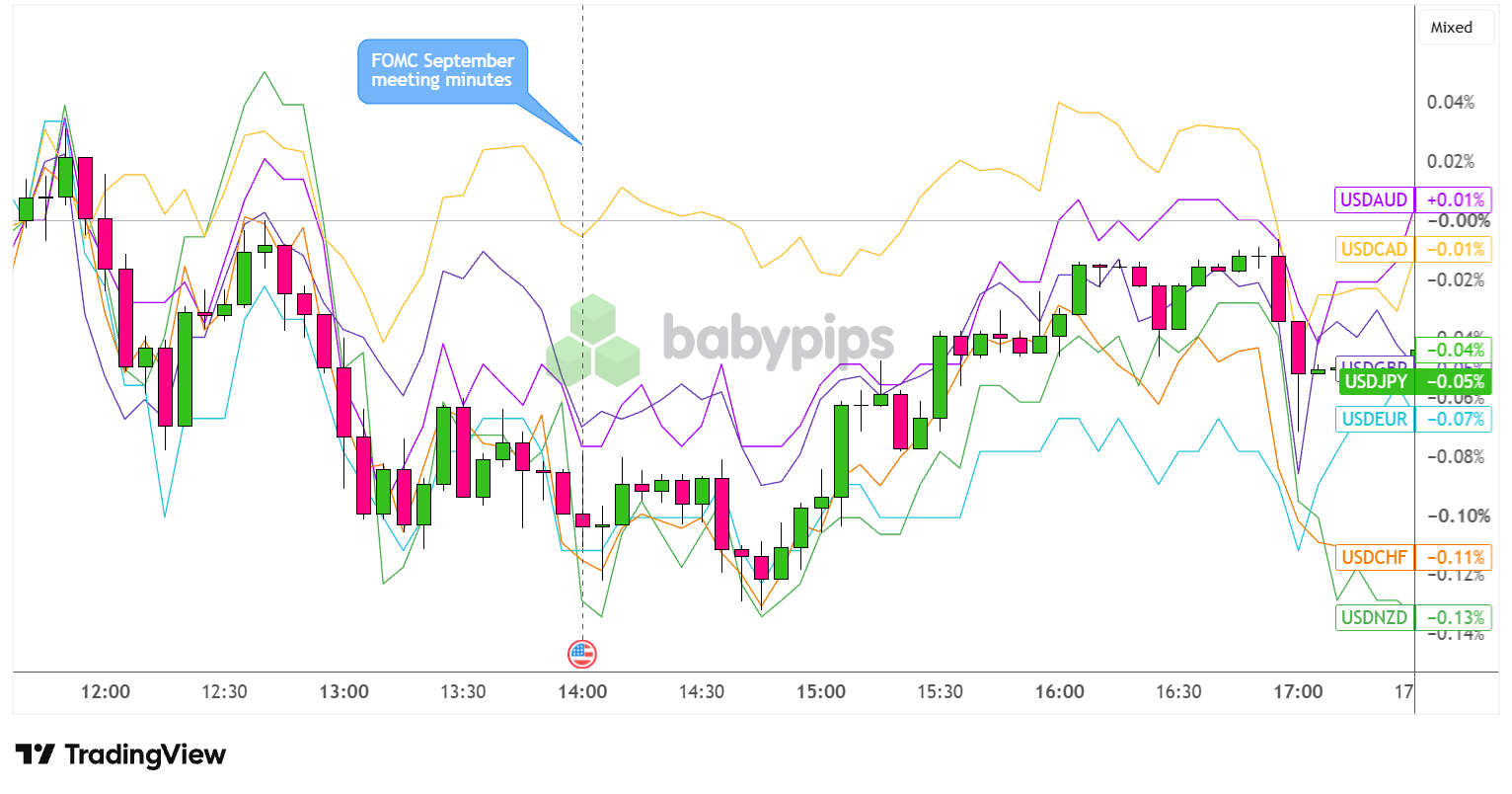
Overlay of USD vs. Major Currencies – Chart Faster with TradingView
Frequently Asked Questions About the FOMC Minutes
What are the FOMC minutes?
The FOMC minutes are a detailed summary of a Fed policy meeting. The Fed releases them three weeks after each meeting. They show how officials debated the economy, inflation, and interest rates.
Why do FOMC minutes matter for forex traders?
Interest rates often drive currency values. The minutes show whether officials lean toward raising, holding, or cutting rates. A hawkish tone tends to support the U.S. dollar. A dovish tone, which leans toward lower rates, tends to weigh on it.
What did the September 2026 FOMC minutes say?
All 19 officials supported raising rates to 3.75% to 4.00%. Most expect another hike by year-end. Officials pointed to energy prices, AI-related spending, and inflation above 2% for more than five years.
Will the Fed raise rates in October 2026?
Markets don’t expect it. Traders price a 20% to 25% chance of an October hike but expect a hike by year-end. Incoming inflation and jobs data will help determine the timing.
What should traders watch next?
Watch Fed speeches, weekly jobless claims, and the next U.S. CPI report. Treasury auctions matter too, since bond yields steered the dollar this week. The Fed announces its next rate decision on October 28.
The September FOMC minutes showed unanimous support for a Fed rate hike, but if you’re new to macro, it may not be clear why narrowing or widening rate gaps between countries can push the dollar up or down. Premium members can read our lesson:
📖 Interest Rates: The Force That Moves Currencies
Reading this helps you understand how interest rate differentials create currency trends, why real interest rates matter more than nominal rates, and how bond yields like the 10-year Treasury reveal where traders expect the Fed to go next.
And if you’re not a Premium subscriber yet, now’s a good time to sign up.
With Babypips Premium, you get full access to School of Pipsology lessons that help you understand not just what the Fed decided, but how shifting rate gaps between countries drive the dollar’s next move.