


U.S. Treasury yields climbed back toward multi-decade highs on Monday, yet the S&P 500 pushed within striking distance of a record as megacap technology shares kept equities bid. The euro went the other way, sliding to its weakest level since May 2025 against USD as French fiscal and political strain pressured the single currency. Oil sank more than 2% after G7 nations agreed to tap emergency reserves and Saudi Arabia cut its November prices to Asia.
Check out the forex news and economic updates you may have missed in the latest trading session!
News Headlines & Data:
- Over the weekend, G7 nations agreed to release 100 million barrels of diesel and crude oil from emergency reserves and to refrain from energy export restrictions.
- Australia S&P Global Services PMI Final for September 2026: 51.9 (51.4 forecast; 53.2 previous)
- Japan S&P Global Services PMI Final for September 2026: 51.3 (51.6 forecast; 52.5 previous)
- Australia TD-MI Inflation Gauge for September 2026: 0.3% m/m (0.5% m/m forecast; 0.5% m/m previous)
- Japan Consumer Confidence for September 2026: 35.4 (35.7 forecast; 35.5 previous)
- Euro area S&P Global Services PMI Final for September 2026: 53.0 (53.0 forecast; 51.6 previous)
- U.K. S&P Global Services PMI Final for September 2026: 52.1 (51.7 forecast; 52.5 previous)
- Euro area PPI Growth Rate for August 2026: 8.2% y/y (8.3% y/y forecast; 5.8% y/y previous)
- Canada S&P Global Services PMI for September 2026: 48.3 (47.5 forecast; 46.8 previous)
- U.S. S&P Global Services PMI Final for September 2026: 58.8 (58.7 forecast; 56.5 previous)
- U.S. ISM Services PMI for September 2026: 54.9 (55.0 forecast; 55.4 previous)
Broad Market Price Action:
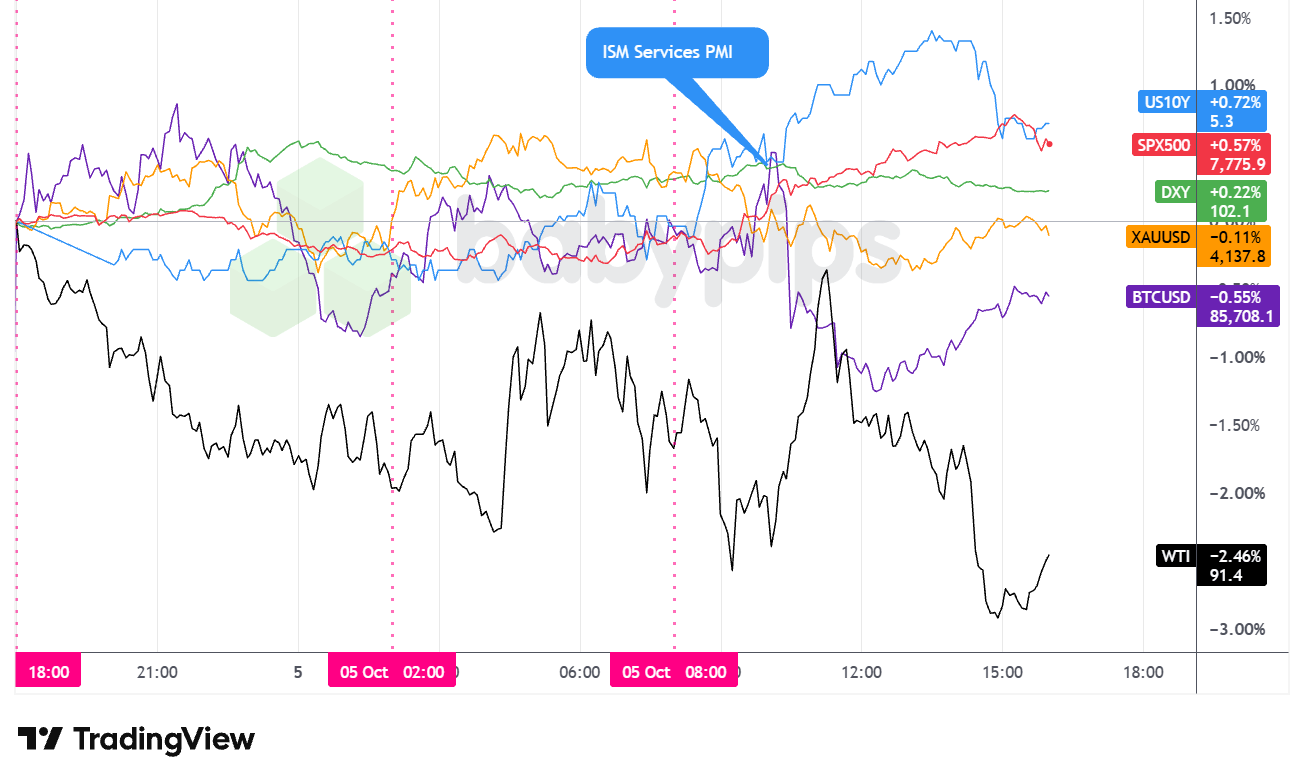
Dollar Index, Gold, Oil, S&P 500, U.S. 10-yr Yield, Bitcoin Overlay – Chart Faster With TradingView
Oil was the session’s weakest major asset. West Texas Intermediate crude fell about 2.5% to the low-$91 area, sliding from its Sunday-evening open near $93.65 and sinking to an intraday low near $91 during the U.S. afternoon. The drop lined up with the G7 agreement to release 100 million barrels from emergency reserves, Saudi Aramco’s November price cut to Asia, and recovering Gulf exports, which together appeared to outweigh Houthi-claimed strikes on Saudi energy infrastructure.
The S&P 500 rose about 0.6% to around 7,776, closing within striking distance of a record. The index held near flat through the Asian session and London session, then climbed through the U.S. session to an intraday high near 7,793 before easing into the close. Leadership from large technology shares looked like the main support, and the advance held even as Treasury yields pushed higher.
The 10-year Treasury yield rose roughly 0.7% to about 5.31%, hovering near multi-decade highs. Yields dipped toward 5.25% overnight, then ground higher through the London and U.S. sessions to an intraday peak near 5.35% in the early afternoon before easing back. The long end’s persistent climb kept the broader market mood on edge.
Gold finished little changed, down about 0.1% near $4,138. The metal firmed overnight to an intraday high near $4,169 during the London session, then faded through the U.S. afternoon. With no gold-specific catalyst to point to, the pullback possibly reflected the firmer dollar earlier in the day and the grind higher in yields.
Bitcoin slipped about 0.6% to around $85,700, with no asset-specific catalyst apparent. It peaked near $86,900 on Sunday evening and drifted to an intraday low near $85,100 around midday before stabilizing. The move possibly tracked the session’s cautious risk tone and the pull from higher yields.
FX Market Behavior: U.S. Dollar vs. Majors
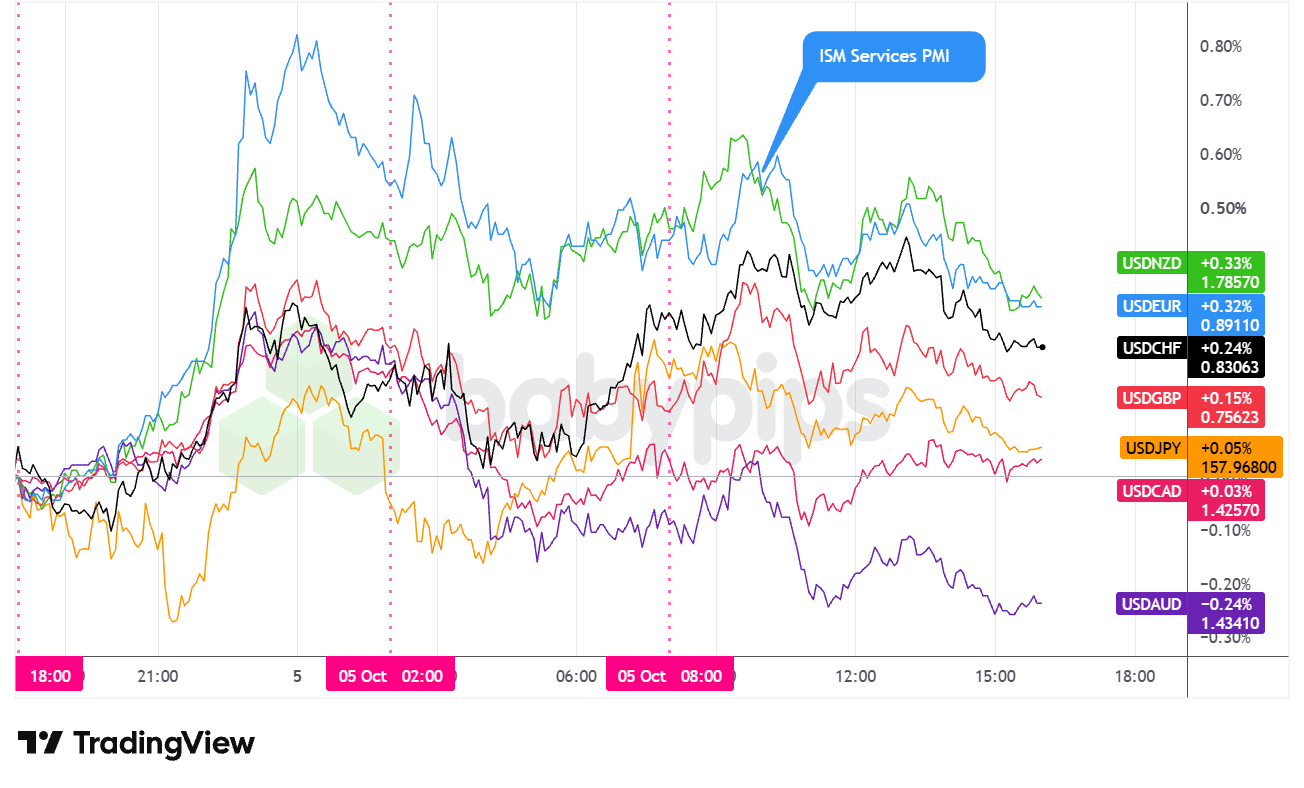
Overlay of USD vs. Major Currencies – Chart Faster With TradingView
The U.S. dollar firmed against most of its major counterparts on Monday, though it spent the back half of the session handing back ground from an overnight peak. The dollar index reached its high near 102.5 around midnight in New York before drifting lower into the close.
During the Asian session, the dollar traded net higher, led by euro weakness. EUR/USD slid to its weakest since May 2025, with French fiscal and political strain and reports of early-election preparations in Spain weighing on the single currency. USD/JPY held near 158 even as Tokyo officials struck a firmer tone, and Bank of Japan Deputy Governor Uchida described artificial intelligence as a large positive demand shock, a framing that kept speculation about an October rate hike alive.
The London session saw the dollar ease off its peak. European services PMIs mostly firmed and the euro and pound steadied, and the dollar index slipped back toward 102.2. An argument could be made that part of the move was profit-taking on the overnight dollar rally, with USD/JPY ticking up to an intraday high near 158.28 early in the session before rolling over.
The U.S. session brought the dollar lower still. The ISM Services headline landed near forecast at 54.9, but the Business Activity sub-index undershot its forecast at 56.5 versus 61.5 while the Prices sub-index jumped to 74.0, a soft-growth and firm-prices mix that offered the dollar little support. The Australian dollar was the one major to gain on the greenback, likely helped by firm domestic price pressures in Australia’s services data that will potentially keep the Reserve Bank leaning hawkish. At the close, the dollar sat modestly higher against the euro, kiwi, franc, and pound, close to flat against the yen and loonie, and lower against the Aussie.
Upcoming Potential Catalysts on the Economic Calendar
- Australia Westpac Consumer Confidence Change for October 2026 at 11:30 pm GMT
- Australia ANZ-Indeed Job Ads for September 2026 at 12:30 am GMT
- Germany Factory Orders for August 2026 at 6:00 am GMT
- Bank of Japan Governor Ueda Speech at 6:35 am GMT
- Swiss Unemployment Rate for September 2026 at 7:00 am GMT
- Euro area Retail Sales for August 2026 at 9:00 am GMT
- ADP U.S. Employment Change Weekly for September 12, 2026 at 12:15 pm GMT
- Canada Balance of Trade for August 2026 at 12:30 pm GMT
- U.S. Balance of Trade for August 2026 at 12:30 pm GMT
- New Zealand Global Dairy Trade Price Index for October 6, 2026
- Fed Williams Speech at 1:05 pm GMT
- Canada Ivey PMI for September 2026 at 2:00 pm GMT
- Fed Bowman Speech at 2:45 pm GMT
- API Crude Oil Stock Change for October 2, 2026 at 8:30 pm GMT
The bond market stays the spot to watch. With the 10-year yield parked near multi-decade highs, another push at the long end would test whether equities can keep shrugging off higher rates and whether the dollar holds its overnight bid.
Bank of Japan Governor Ueda’s remarks headline the Asian session, and any lean toward an October hike would give the yen a reason to firm.
The euro remains exposed to further French and Spanish political headlines, while the weekly ADP read and the U.S. trade figures offer incremental checks on the labor market and growth after Friday’s softer jobs report.
This recap shows how Treasury yields, stock markets, oil prices, and currency moves all shifted together in a single session. Readers often miss why these assets are moving in sync, but the connections aren’t random. Premium members can read our lesson:
📖 What Is Intermarket Analysis?
Reading this helps you understand why higher Treasury yields ripple into FX markets, how oil prices and G7 intervention affect currency strength, and the framework that ties stocks, bonds, commodities, and forex into one coherent picture.
And if you’re not a Premium subscriber yet, now’s a good time to join.
With Babypips Premium, you get full access to School of Pipsology lessons that help you understand how the bond market, equity markets, and commodity prices drive the currency moves you’re watching, so you can read a trading session like this one with full market context instead of guessing at connections.