

The Kansas City Fed’s annual economic symposium kicks off in Jackson Hole, Wyoming, on August 27, and it wraps Friday with the one moment every trading desk actually cares about:
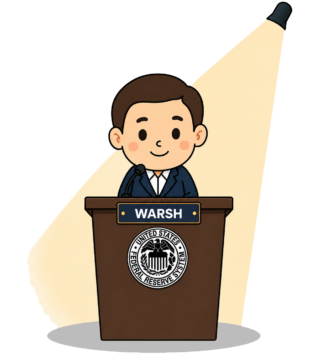
Fed Chair Kevin Warsh’s keynote address.
This will be Warsh’s first Jackson Hole speech since taking over the Fed on May 22, and new chairs typically use this stage to set the tone for their tenure.
The symposium’s official theme is “Financial Innovation: Implications for Payments and Policy,” a title built for talk of central bank digital currencies and real-time payment rails.
Most traders will likely skim past that part. What they want is a read on rates, inflation, and where policy heads next.
Now it’s important to note that Fed officials rarely say “we’re raising rates” outright. Instead, watch for hawkish (supportive of higher rates) language like “vigilant” or “inflation remains sticky.” Dovish (supportive of lower rates or holding steady) language sounds more like “patient approach” or “progress on inflation.”
Why Does Warsh’s Speech Carry So Much Weight?
The backdrop explains the tension. At the July 29 FOMC meeting, the committee voted 9-3 to hold rates at 3.50% to 3.75%. Three regional presidents, Cleveland’s Beth Hammack, Minneapolis’s Neel Kashkari, and Dallas’s Lorie Logan, dissented in favor of a hike.
That’s the most hawkish split vote the Fed has produced since September 2016, and it left Warsh facing pointed questions about whether the Fed has a credible plan to bring inflation back to target.Long-end Treasury yields have been climbing on their own momentum since late June. The 30-year hit a 19-year high above 5.3% last week, a move tied to several forces stacking on top of each other: a rising term premium as investors demand more compensation to hold long-dated debt, a wave of AI-related corporate bond issuance competing for the same pool of capital, and elevated energy prices tied to the ongoing Iran conflict.
The Treasury tried to calm that market on August 19 with a surprise announcement of doubling its long-end buyback capacity – a liquidity tool rather than a rate decision – and yields eased modestly in response.
 That’s the needle Warsh has to thread. He told reporters after the July meeting he wants his remarks to “frame the big questions” around long-term structural issues rather than offer near-term guidance on the next rate move.
More important to note is that Warsh has also been pulling the Fed away from its old habit of telegraphing decisions in advance a.k.a. forward guidance. So there’s a real chance markets get less specific guidance than they’re hoping for, and that uncertainty is itself something to trade around.
As of August 25, the CME FedWatch Tool puts the odds of a September rate hike near 40%, a level that has swung meaningfully in recent weeks as jobs and inflation data have come in mixed.
Wednesday’s core PCE report (the Fed’s preferred inflation gauge) and Thursday’s revised GDP estimate will shape that number further before Warsh even reaches the podium Friday.
What Does This Mean for Markets?
A speech that leans hawkish, more concern about inflation, less appetite to look past it, would likely support the U.S. dollar and push Treasury yields higher, since investors would price in a better chance of that September hike actually happening.
A dovish lean, more comfort with current policy, more patience, would tend to work the opposite way, and could extend the risk-on mood that’s shown up elsewhere in markets this week.
Promotion: Market expectations and the backdrop of rising bond yields can influence price reactions to Warsh’s Jackson Hole testimony. TradeZella’s AI trading partner can analyze your trades, uncover recurring patterns, and build a game plan for your next move.
Start Your Trading Journey with TradeZella & use code “PIPS20” for 20% off your first purchase!
Disclosure: To help support our free daily content, we may earn a commission from our partners if you sign up through our links, at no extra cost to you.
Gold offers a useful lens here. Lower rate-hike odds compress real yields, the inflation-adjusted return on holding Treasuries, which reduces the opportunity cost of holding a non-yielding asset like gold and tends to push its price higher. That mechanism runs in reverse if Warsh sounds more hawkish than expected.
Given the AI-related bond supply competing with Treasuries for the same capital, and elevated energy costs from the Iran conflict still working through inflation data, the case for a near-term Fed pivot in either direction looks more complicated than a single speech can resolve.
Multiple currencies carry a stake this week. USD/JPY, EUR/USD, and gold (XAU/USD) all tend to move on shifts in U.S. rate expectations, so a surprise in tone Friday could ripple well beyond the dollar itself.
The Bottom Line
- Fed Chair Kevin Warsh delivers his first Jackson Hole keynote Friday, August 28, around 10:00 a.m. ET, with prepared remarks posted live to the Kansas City Fed’s website.
- A hawkish tone (emphasizing inflation risk, openness to a hike) tends to support USD and pressure gold; a dovish tone (patience, comfort with current policy) tends to do the opposite.
- Markets have already priced in a mostly neutral speech, according to a recent BofA survey, so the bigger reaction may come if Warsh surprises in either direction.
- September rate hike odds sit near 40% as of August 25 and can move quickly on data between now and the speech.
- Watching just one currency pair rarely tells the full story. Checking the dollar against several majors at once, and against gold, gives a clearer read on whether a move is dollar-specific or currency-specific.
What to Watch Next
Wednesday brings U.S. core PCE, personal income and spending, durable goods orders, and the second Q2 GDP estimate, all ahead of Warsh’s Friday keynote around 10:00 a.m. ET.
The September 16-17 FOMC meeting is the next decision point, and any hawkish or dovish surprise from Jackson Hole will likely shift those odds in the days that follow.
Fed Chair Kevin Warsh’s first Jackson Hole keynote has traders parsing every word for hawkish or dovish signals, terminology that shapes how markets read any central bank statement. Premium members can read our lesson:
📖 Hawkish vs. Dovish: How to Read Central Bank Language
Reading this helps you understand how to spot hawkish and dovish language in Fed communication, where a central bank sits on the policy spectrum, and why a single speech like Warsh’s can move USD, gold, and other markets more than the actual rate decision itself.
And if you’re not a Premium subscriber yet, now’s a good time to sign up.
With Babypips Premium, you get full access to School of Pipsology lessons that help you understand not just what the chart is showing after a Fed speech, but the hawkish and dovish signals that moved it there.