

You marked the date, studied the forecasts and charts, and planned for every likely outcome.
But when the event arrived, price moved the other way. What’s up with that?!
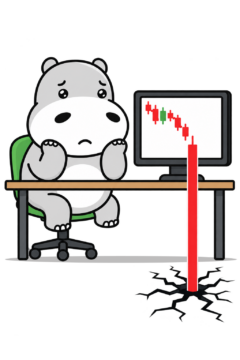 You’ve probably seen scenarios where inflation came in hot, yet the currency fell. Or maybe a central bank raised rates, only for bond yields to drop. The news made sense, but the reaction didn’t.
This is where traders stumble. Many assume the market is wrong and will correct itself, so they hold, add to the position, or chase the move.
But the market isn’t required to follow your script. And when it doesn’t, your response matters more than your forecast.
Here are some tips for handling that surprise without losing your discipline:
Pause and wait for a new setup
When price moves quickly, it creates false urgency, making every second feel like a missed opportunity. Give the first wave time to pass, since spreads may widen, large orders may hit at once, and price may swing both ways before the direction clears.
Waiting won’t guarantee a better trade, but it can stop you from making an emotional one.
If the evidence breaks your setup, exit instead of turning a short-term trade into a long-term position simply to avoid the loss. Reversing immediately can be just as dangerous when you’re trying to win back money instead of following a fresh signal.
Before you enter again, decide what price must do, whether that’s a confirmed breakout, a failed retest, or a return to calmer conditions. If the picture remains unclear, reduce your size or stay out. Confusion is information, and it usually means your edge is weaker than usual.
Promoted: When markets ignore the script, traders can easily confuse a bad outcome with a bad decision.
In “Thinking in Bets” (4.3⭐ on 5K reviews on Amazon), former poker champion Annie Duke explains how to separate luck from skill, think in probabilities, and update your view without letting one surprise wreck your process.
Develop a probabilistic mindset with “Thinking in Bets” by Annie Duke!
Disclosure: We may earn a commission from our partners if you sign up through our links, at no extra cost to you.
Let price explain the news
The result and reaction are separate information, which is why good news doesn’t always produce the move you expected. A report can look strong but disappoint traders who expected more, while a rate increase can weaken a currency if the central bank signals it’s finished.
Positioning can shape the reaction. If nearly everyone holds the same view, few traders remain to push it farther, so good news may trigger profit-taking instead of a rally.
Instead of arguing with the reaction, watch price near levels. A break that holds beyond support or resistance shows acceptance, while a quick return to the range suggests the first move failed. Price can’t explain everything, but it shows whether traders will stand behind it.
Review the process, not only the loss
Once the market settles, don’t ask why you lost. Ask whether you followed your trading plan, because a good decision can still produce a bad result.Markets deal in probabilities, not promises. If your size was sensible, your stop was set, and evidence supported your view, the loss doesn’t prove poor trading. It means an unfavorable outcome occurred.
Process errors are different. Moving your stop, risking too much, or adding without reason are correctable errors. A valid setup can lose despite good execution, while poor execution can profit through luck. Judge only outcomes, and you’ll learn the wrong lesson from both.
Turn the surprise into feedback
After the event, save the chart and review the sequence. Write what you expected, what happened, and how you responded, then note what you felt. Fear, anger, and overconfidence influence decisions before you’re aware of them.
Ask what would’ve changed your view sooner. Your notes may reveal patterns in the market and yourself, helping you prepare without pretending you can predict future surprises.
Your goal isn’t to get every event right, but to manage risk, process new information, and update your view without ego.
Strong traders don’t avoid surprise; they turn it into useful feedback without letting one loss become three.
When the market reacts the opposite way you expected to a news event, your response in the moment matters more than your forecast. If trading plan discipline is an area you’re still building, Premium members can read our lesson:
📖 Sticking to Your Trading Plan
Reading this helps you understand why following your process consistently matters, how to avoid the costly mistakes that compound a losing trade, and how to build the discipline that gives your strategy a real chance to work.
And if you’re not a Premium subscriber yet, now’s a good time to sign up.
With Babypips Premium, you get full access to School of Pipsology lessons that help you understand not just what to do when trades go your way, but how to respond when a market surprise tests your process and your discipline.