


Japan may have just spent around $35 billion buying yen to stop its currency from falling too far, too fast.
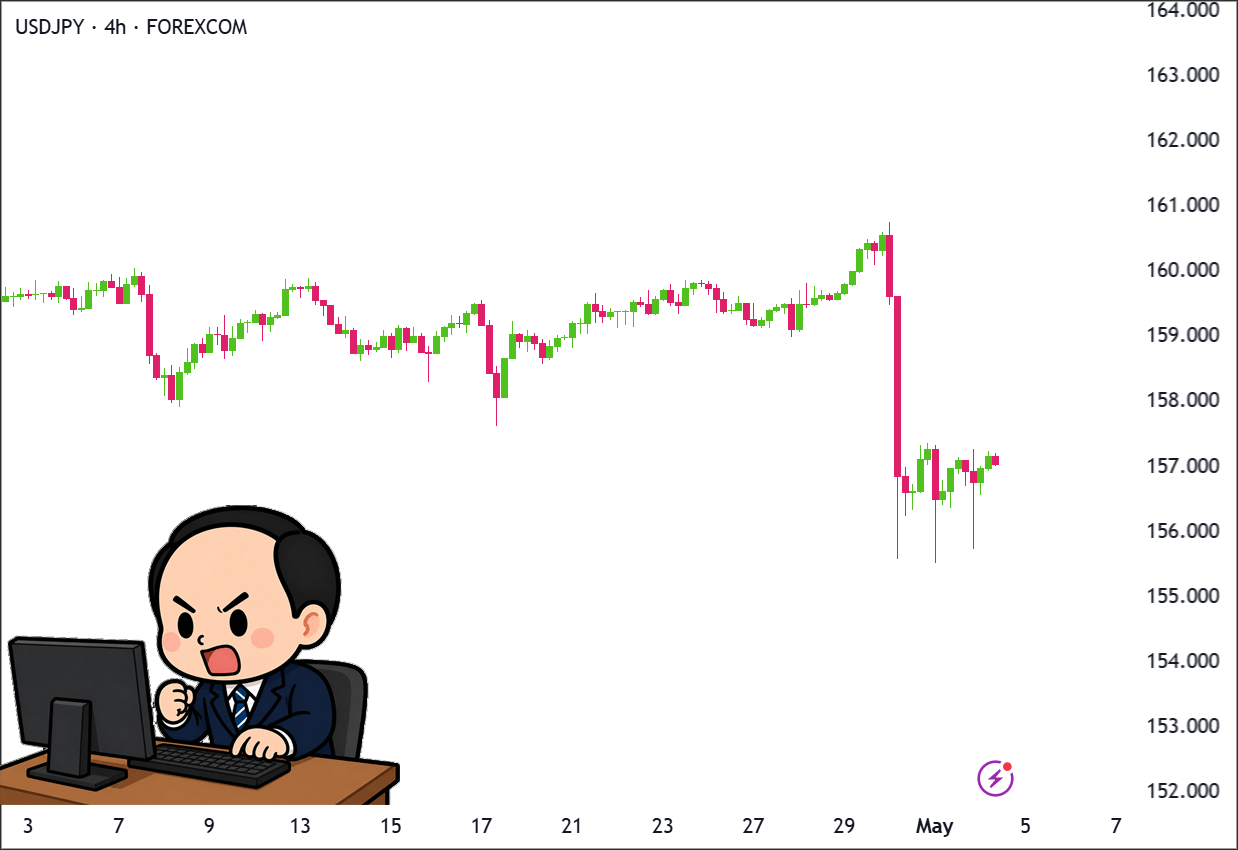
Last week, Bank of Japan data suggested Tokyo likely stepped into the market to support the yen after USD/JPY pushed above the 160 level.
Then, earlier today, the yen suddenly spiked briefly, putting traders on alert for another possible round of intervention.
Why does this matter?
Because currency intervention is not just a “yen story.”
When a central bank or finance ministry enters the market, it can create sudden moves that technical analysis alone may not fully explain.
In Japan’s case, supporting the yen may require selling foreign reserves, which can include U.S. Treasury bonds.
If Tokyo keeps intervening, that could put upward pressure on U.S. bond yields.
Higher yields can then spill over into risk sentiment, negatively affecting risk assets such as stocks and beta currencies.
That’s the kind of macro domino chain traders need to understand.
A chart might show the candle.
But macro tells you why the candle happened.
Trading Yen? What You Should Watch Next
The big question now is whether Japan’s intervention was a one-off warning shot or the start of a broader campaign to defend the yen.

The first thing to watch is USD/JPY around the 155 to 160 zone.
The yen’s recent jumps have come after USD/JPY traded near levels where Japanese officials appear uncomfortable.
If USD/JPY quickly climbs back toward 160, market participants may start pricing in a higher chance of another intervention attempt.
Today’s spike briefly pushed USD/JPY as low as 155.69 before the move partially faded, suggesting markets remain on alert but also that intervention may struggle to create a lasting reversal by itself.
You should also monitor official comments from Japan’s Ministry of Finance.
Did you know? The Ministry of Finance (MOF) is the one with the legal authority to order foreign exchange interventions and manage Japan’s FX reserves. The Bank of Japan (BOJ) is the operational executor. It carries out the actual buying/selling of yen on the MOF’s behalf, but the actual decision rests entirely with the MOF.
Japanese officials usually do not confirm intervention immediately, but phrases like “excessive moves,” “speculative moves,” or “decisive action” can signal that Tokyo is becoming uncomfortable again.
Finance Minister Satsuki Katayama recently declined to confirm whether Japan had intervened, even as markets continued to suspect official yen-buying
New to Currency Interventions?
If you’re not familiar with how currency intervention works, Premium members can read our lesson:
📖 Currency Intervention: When Central Banks Enter the Market
Reading this helps you understand how intervention works, why it can trigger sudden moves, and how traders can manage the risk.
And if you’re not a Premium subscriber yet, this is a good time to join.
With Babypips Premium, you get full access to School of Pipsology lessons that help you understand not just what’s happening on the chart, but the market forces that charts alone don’t always reveal.
These include currency intervention, central banks, interest rates, inflation, economic data, risk sentiment, and other macro fundamentals that can affect your trades.
Because sometimes the biggest move on your chart starts long before the candle appears.