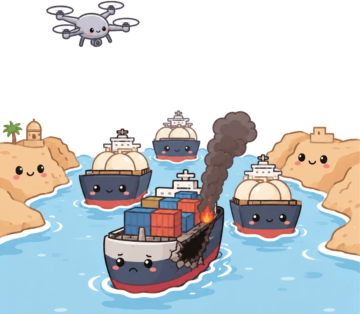
A Cyprus-flagged container ship is sitting disabled in the Strait of Hormuz after its engine room was destroyed. Iran also launched drone strikes on Oman, the same country that had been brokering peace talks.
Meanwhile, US Central Command hit Iranian military targets before launching another round of strikes on Sunday.
Markets have seen plenty of dramatic headlines from this conflict before, and traders have often used the initial oil spike as a selling opportunity.
This time, though, the weekend developments changed the setup in a meaningful way. Here’s why.
What Is the Strait of Hormuz, and Why Does Every Oil Trader Watch It?
Before the war began in February, about 20% of globally traded crude, or roughly 20 million barrels a day, passed through the strait. Qatar’s LNG exports, which supply about 12% to 14% of Europe’s gas, also move through it, while Iraq, Kuwait, and Qatar have few meaningful alternatives.
The war premium is the extra cost traders add to oil to account for supply risk. It holds when disruption looks real, but fades quickly when barrels keep moving.
That’s what happened last week, until the weekend changed the calculation.
So What Actually Happened This Weekend?
On Saturday, Iranian forces fired on a Cyprus-flagged container ship in the strait, damaging its engine room, starting a fire, and leaving one civilian crew member missing. Iran then declared the waterway closed until further notice and said talks would not resume unless the US first met its conditions.
US Central Command answered that night by striking 140 Iranian military targets, including missile systems, air defenses, and IRGC naval assets. Across the three-night campaign that began Wednesday, US forces hit more than 300 targets.
Iran widened its retaliation on Sunday with attacks on Bahrain, Kuwait, Qatar, Jordan, and Oman. The strikes on Oman carried extra weight. Oman had spent months serving as the main diplomatic channel between Washington and Tehran, while its Musandam corridor had become an alternative route for tankers avoiding the most dangerous parts of the strait.
By striking Musandam province, Tehran hit both the country keeping talks alive and the route helping ships keep moving. Oman summoned Iran’s ambassador in protest.
By Sunday evening, the official picture had become even murkier. CENTCOM said 55 merchant ships crossed the strait carrying 17 million barrels, while maritime intelligence firm Windward reported that traffic had fallen after Iran announced the closure. Both accounts can’t be fully accurate, and that uncertainty matters.
When traders can’t tell what’s physically happening in one of the world’s most important shipping lanes, they usually demand a higher risk premium rather than wait for perfect clarity.
Promotion: Oil shocks can ripple through inflation expectations, central bank pricing, and currency markets before traders have time to sort out what actually moved their positions.
TradeZella’s new AI trading partner can break down your trades, spot recurring mistakes, and help build a clearer game plan, so you can spend less time digging through old charts and more time preparing for the next market move.
Start Your Trading Journey with TradeZella & use code “PIPS20” for 20% off your first purchase!
Disclosure: To help support our free daily content, we may earn a commission from our partners if you sign up through our links, at no extra cost to you.
Why Did Markets Mostly Ignore the War, and What Changed This Time?
 After the U.S. and Iran signed a ceasefire and memorandum of understanding on June 18, WTI crude slipped back below $70 a barrel, wiping out the war premium and returning to prewar levels. Even two days of US airstrikes last week only pushed WTI to about $75.70 before prices fell more than 3.7% on Thursday.
Traders kept reaching the same conclusion: the headlines were getting worse, but the actual disruption wasn’t. Ships rerouted through Omani waters, Trump kept signaling that he wanted the strait open, and negotiations repeatedly restarted. The rhetoric escalated, while oil flows adapted.
This weekend challenged that logic in three important ways.
First, a ship was physically disabled. It wasn’t merely threatened or warned away. Its engine room was destroyed, it caught fire, and a crew member went missing. Markets can brush off rhetoric for a long time, but they can’t ignore physical damage forever.
Second, Iran struck Oman. Tankers had been using a route through Omani waters to avoid the most dangerous parts of the strait, so an attack on Musandam province directly threatens that workaround. If the corridor becomes unusable, Persian Gulf exporters lose their most practical alternative.
Third, the Oman strikes suggest the diplomatic track is breaking down. Oman had served as the neutral channel between Washington and Tehran, and diplomatic progress was one of the main reasons traders kept fading the war premium. By striking its own mediator, Iran gave markets a reason to question whether that path still exists.
Why Should Forex Traders Care About an Oil Chokepoint?
Oil shocks rarely stay confined to energy markets. A sustained supply disruption raises import costs for energy-dependent economies, pushes inflation expectations higher, and changes interest rate pricing. Currency markets usually react more slowly than stocks, but the chain is clear.
Oil exporters such as Canada and Norway can benefit from higher crude prices, giving the Canadian dollar and Norwegian krone some support. That matters with the Bank of Canada meeting Wednesday, since another oil spike adds to an already difficult balance between weak growth and stubborn inflation.The more complicated story is the split in safe haven demand between the US dollar and the Japanese yen. Both strengthened last week, but probably for different reasons. The dollar drew support from rising rate hike expectations as oil threatened more inflation, while the yen benefited from traditional risk aversion.
When both currencies rise together, markets may be pricing two fears at once: inflation risk and war risk. That means not all dollar strength this week is telling the same story.
Quick Takeaways
- The Strait of Hormuz carries roughly 20% of globally traded crude oil daily, with no significant alternative sea routes for most Persian Gulf producers.
- A war premium is the extra cost baked into oil above fundamental value to reflect supply disruption risk. It bleeds out when disruption fails to materialize physically; it sticks when physical evidence arrives.
- Three weekend developments distinguish this escalation: a ship physically disabled, Iran striking Oman (its own mediator and host of the bypass corridor), and conflicting official statements about whether the strait is functioning.
- Commodity-linked currencies like CAD and NOK may reflect oil moves more directly. USD and JPY safe-haven strength may be running on different underlying narratives this week, and distinguishing which is which matters.
What to Watch This Week
Maritime tracking data, not official government statements from either side, is the real-time signal for whether the strait is physically open. Tanker transits through the Omani Musandam corridor specifically are worth watching: if that route goes quiet, the bypass disappears and the supply picture changes materially.
Fed Chair Kevin Warsh testifies before the House Financial Services Committee Tuesday at 14:00 GMT, ninety minutes after June CPI drops at 12:30 GMT. If he explicitly links energy prices to inflation persistence, the Hormuz story feeds directly into rate expectations and amplifies the dollar dynamic. Bank of Canada rate decision follows Wednesday, July 15 at 13:45 GMT.
This article explains why the latest Strait of Hormuz escalation is affecting currency markets differently, including safe haven dynamics that may not be immediately obvious. Premium members can read our lesson:
📖 Geopolitical Risk, Trade Policy, and Safe Haven Flows
Reading this helps you understand how geopolitical shocks transmit into currency moves, which safe havens respond to different types of risk, and why USD and JPY can both strengthen at the same time for entirely different reasons.
And if you’re not a Premium subscriber yet, now’s a good time to sign up.
With Babypips Premium, you get full access to School of Pipsology lessons that help you understand not just what currencies are doing, but the geopolitical forces and safe haven dynamics driving the moves.