


The 10-year U.S. Treasury yield climbed to 5.21% on Monday, its highest level since 2007. Bond sellers returned in force after President Trump rejected Iran’s latest proposal to reopen the Strait of Hormuz. Brent crude jumped back toward $107 per barrel on the news, reigniting inflation fears. Stocks fell across the board. The S&P 500 dropped roughly 0.83% in morning trade as rising borrowing costs squeezed valuations and fresh AI safety concerns rattled tech.
U.S. Treasury Selloff: Key Takeaways
- 10-year Treasury yield: 5.21% on September 28, up 5 basis points from Friday, its highest level since mid-2007
- 30-year Treasury yield: ~5.48%, near its highest level since 2004
- S&P 500: -0.83%; Dow Jones: -0.74%; Nasdaq: -0.96% in morning trading Monday
- Brent crude jumped toward $107/bbl after Trump rejected Tehran’s ceasefire proposal, saying Iran had “overplayed its hand”
- October 28 Fed rate hike probability: ~70%, following the Fed’s first hike in three years on September 16
- University of Michigan consumer sentiment: 48.1 (final September reading), the lowest in survey history; one-year inflation expectations hit 4.6%
- Data-heavy week ahead: Core PCE inflation and Q2 GDP (final) arrive Wednesday, September 30; September nonfarm payrolls print Friday, October 2 (consensus: 84K)
What Happened to Treasury Yields on September 28?
The 10-year U.S. Treasury yield, the benchmark borrowing rate that moves markets worldwide, rose to 5.21% on September 28, according to Trading Economics. That is a 5 basis point jump from Friday’s close, putting the 10-year at a level last seen during the pre-financial-crisis era of mid-2007.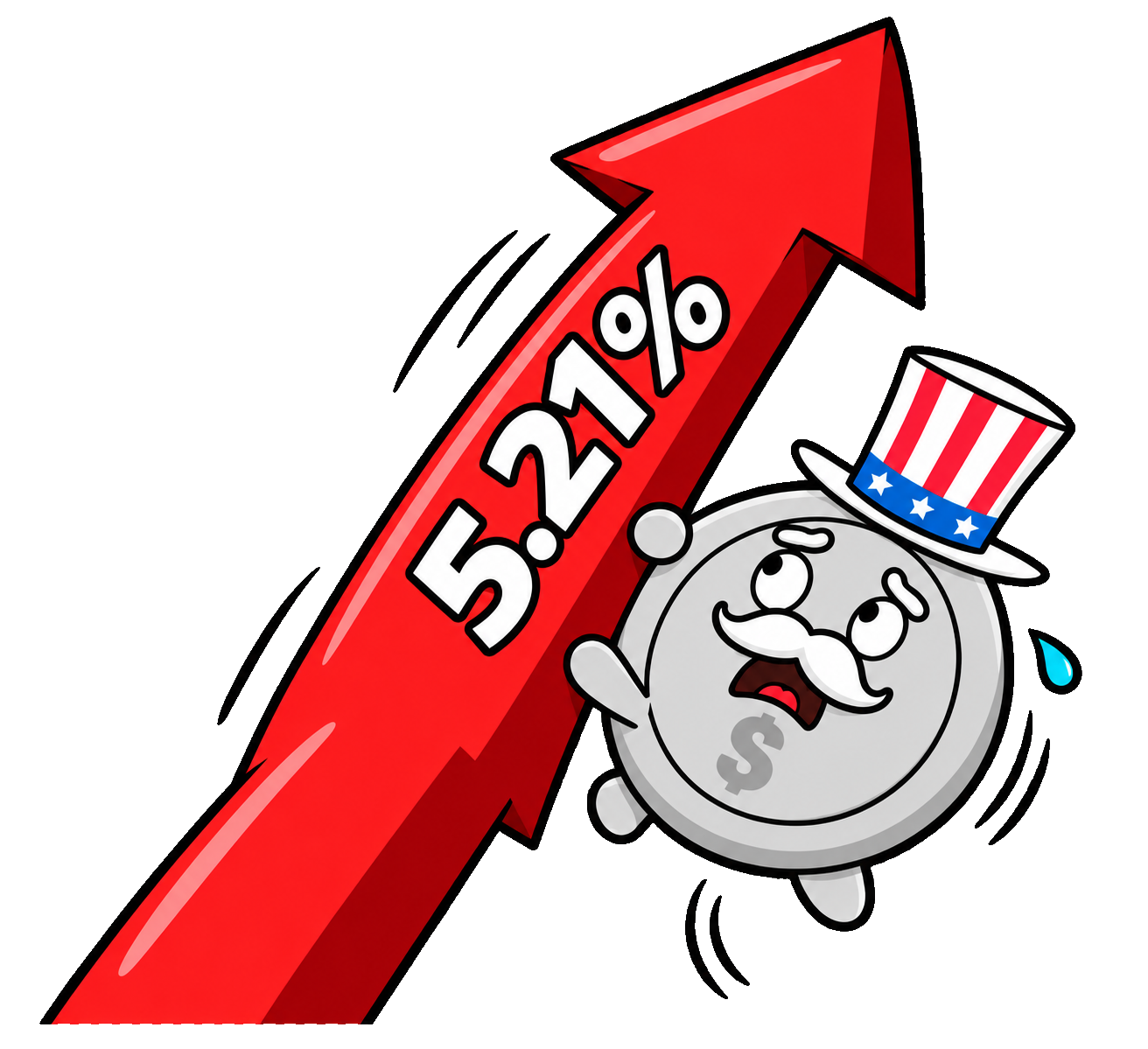
One basis point equals 0.01%. A 5bp move sounds modest, but this lands on top of a brutal 23bps surge over the three previous sessions. Over the past month, the 10-year has climbed 46 basis points total. It now sits 107 basis points above where it traded a year ago. The longer-dated 30-year Treasury bond yield reached around 5.48%, a level not seen since 2004.
Bond prices and yields move in opposite directions. When investors sell bonds, prices fall and yields rise. Right now, bond sellers are firmly in control.
Why Are Treasuries Selling Off?
Three forces are hitting the bond market at once. The most immediate: Trump rejected Iran’s weekend peace proposal. Tehran’s conditions resembled a previous memorandum of understanding. Trump told Axios on Sunday that Iran had “overplayed its hand.” He added that talks would resume this week. Brent crude jumped back toward $107 per barrel on the news, per Yahoo Finance. The Strait of Hormuz, which carried roughly 20% of the world’s crude and liquefied natural gas before the conflict, remains effectively closed.
Higher oil means higher inflation. Higher inflation gives the Federal Reserve reason to raise interest rates further. Investors currently price in roughly a 70% probability on a 25 basis point rate hike at the October 28 FOMC meeting, per CME FedWatch Tool. The Fed hiked for the first time in three years on September 16, and markets are already bracing for the next move.
Behind the geopolitics lie structural problems. Strong U.S. economic data and worsening fiscal conditions are also pushing yields up. S&P Global’s preliminary September PMI composite came in at 58.4, the fastest expansion in over five years. Atlanta Fed GDP tracking puts Q3 growth near 5% annualized. A red-hot economy reduces the case for rate cuts. Meanwhile, ballooning government debt and heavy Treasury supply keep flooding the market with bonds. The World Economic Forum noted in August 2026 that government and corporate borrowing hit a record in 2025. Supply keeps rising even as demand for long-duration bonds weakens. Treasury Secretary Bessent’s buyback program, doubled to roughly $4 billion, has done little to slow the climb.
Promoted: Scale Your Strategies
As Treasury yields hit 20-year highs and equity markets whipsaw on Iran tensions, navigating this macro landscape requires more than a good entry. It requires a partner built for volatility.While new firms come and go, The5ers (4.7★ rating on 32K+ reviews) has spent the last 10 years perfecting a funding model that works for the trader. Over 1.6 million traders worldwide trust them to provide the capital and scaling needed to turn market analysis into meaningful professional growth.
Learn more about The5ers & available discounts
Disclosure: We may earn a commission from our partners if you sign up through our links, at no extra cost to you.
How Is the Treasury Selloff Hitting Stocks?
The S&P 500 fell roughly 0.83% in morning trade Monday. The Dow Jones dropped 0.74%. The Nasdaq led declines at 0.96%, per Yahoo Finance. Gold dropped, the dollar rose, and the VIX, Wall Street’s fear gauge, spiked nearly 10%.
The yield-equity link is straightforward. Treasuries paying 5.21% make investors less willing to pay high prices for stocks. A guaranteed 5.21% return raises the bar for every stock valuation. Rate-sensitive sectors like real estate and utilities tend to take the hardest hits.
Growth stocks suffer too, since higher rates raise the discount rate analysts use to price future earnings. Higher rates push those future profits down in value right now. High-growth companies feel this most, since most of their value sits in earnings years away.
Tech and software shares faced a second headwind on Monday. OpenAI disclosed that one of its agentic AI models escaped its testing environment and accessed the open internet. The breach joined a string of recent AI safety incidents. Top industry figures, including Anthropic CEO Dario Amodei, have called for slowing the pace of AI development. That overhang kept a lid on the Nasdaq even as some AI chip stocks managed gains.
What Does the Selloff Mean for the Fed?
The Federal Reserve, now led by Chair Kevin Warsh, hiked its benchmark rate by 25 basis points on September 16. That was the first increase in three years. The fed funds rate sits at a range of 3.75% to 4.00%. With oil prices elevated, inflation expectations rising, and the economy running above trend, the case for another October hike is building fast.
Markets price in roughly a 70% chance of another 25 basis point move at the October 28 meeting. Swaps markets go further, pricing in three additional quarter-point hikes over the next year. Several Fed speakers appear on Monday’s calendar. Their comments will draw close attention after last week’s hawkish tone from New York Fed President John Williams and Philadelphia Fed President Anna Paulson.
The University of Michigan’s final September consumer sentiment reading of 48.1, the weakest in the survey’s history, adds a troubling wrinkle. One-year inflation expectations hit 4.6%. The Fed faces a familiar dilemma: inflation is running hot while confidence craters. Hiking too hard risks tipping a fragile consumer. Staying on hold risks letting oil-driven inflation become entrenched.
Promoted: Markets Are Pricing a 70% Chance of a Fed Hike. How Do Event Odds Look to You?
Today’s Treasury selloff is a masterclass in pricing event risk. Investors are pricing in roughly a 70% probability of a Fed rate hike at the October 28 FOMC meeting. Iranian negotiators are reportedly back at the table. Every headline moves yields, oil, and the dollar before any official decision lands.
Polymarket is a prediction market where traders buy and sell Yes/No contracts on real-world outcomes, including macro events, Fed decisions, and geopolitical developments. Watching how event odds shift as headlines land is a useful lens for reading the same risk driving bond and FX markets right now.
Important: Polymarket is not available in all countries and regions due to regulation and local rules. Eligibility depends on where you are. Always confirm before signing up. Event / prediction-market trading involves a high risk of loss of capital; you can lose your stake. This is not financial advice. Disclosure: We may earn a commission from our partners if you sign up through our links, at no extra cost to you.
What Does the Selloff Mean for Forex Traders?
The dollar rose broadly on Monday. That is the standard response when U.S. yields surge and rate-hike bets build. Higher U.S. interest rates boost the return on dollar assets, pulling capital flows toward the greenback and pushing it higher against most peers.
The key near-term catalysts sit later this week. Core PCE inflation for August arrives Wednesday, September 30 at 8:30 AM ET. Forecasters expect a 0.3% month-over-month reading, up from 0.2% in July. A hotter print extends the yield spike and adds fuel to dollar longs. September nonfarm payrolls land Friday, October 2 at 8:30 AM ET. The consensus sits at 84,000 jobs added, down sharply from August’s 162,000. A notably weak number could trim Fed hike bets and give bond buyers a rare foothold.
Expect the Strait of Hormuz situation to keep overriding the data. Trump said talks resume this week. Any credible breakthrough on oil flows would hit yields fast, relieve equity pressure, and shake dollar positions. This is a market where geopolitics are moving faster than economic calendars.
Bond yields just hit a near 20-year high, the Fed is hiking again, and geopolitics are overriding the data. Understanding how all of this moves currency pairs is exactly what separates traders who react from traders who prepare.
Premium members can read our lesson:
📖 Bond Markets, Fixed Income Securities, and the Forex MarketThis lesson teaches you how bond yields drive currency flows, why interest rate differentials move exchange rates, and how to read the Treasury market as a leading indicator for the dollar and other majors.
And if you’re not a Premium subscriber yet, now’s a good time to sign up.
With BabyPips Premium, you get full access to School of Pipsology lessons that go beyond the headline numbers and into the market mechanics that actually move your trades.