The United States and Iran reached an interim peace agreement on Monday, June 15, to reopen the Strait of Hormuz — the world’s most important oil shipping lane — after a war that began on February 28 and sent crude prices soaring. Brent crude fell $4.39, or 5%, to $82.94 a barrel, according to Reuters, down sharply from a peak of around $125 in late April. But the deal is far from done: a formal memorandum of understanding (MOU) is not yet signed, the full agreement text has not been released, and analysts warn the peace is fragile at best.
US-Iran Hormuz Strait Deal: Key Takeaways
- Brent crude fell 5% to $82.94/barrel on Monday — but oil is still up roughly 40% since the start of 2026, per Bloomberg.
- WTI (U.S. crude) fell 5.4% to $80.26/barrel, hitting its lowest level since March 10, according to Reuters.
- MOU signing set for Friday, June 20 in Switzerland — neither the US nor Iran has released the agreement text yet, per Reuters.
- Ceasefire extended by 2 months from the original April 8 truce, giving negotiators time to work toward a longer-term deal on Iran’s nuclear program.
- ~600 vessels remain stuck in the Persian Gulf, waiting to transit the strait once it reopens, per shipping intelligence firm Kpler via Bloomberg.
- Iran’s free passage window: 60 days only. After that, Tehran plans to charge fees for navigation and safety services — a point the US has not yet agreed to, per CNBC.
- US Treasury yields dropped on the deal news: the 10-year Treasury yield fell to 4.459% and the 2-year fell to 4.054%, per CNBC.
What Is the US-Iran Hormuz Strait Deal?
The Strait of Hormuz is a narrow waterway between Iran and Oman. It is the only sea route out of the Persian Gulf, and roughly one-fifth of the world’s oil and liquefied natural gas (LNG) supplies normally pass through it, according to NPR. Iran effectively closed the strait when the war began on February 28, firing on vessels and disrupting global energy flows.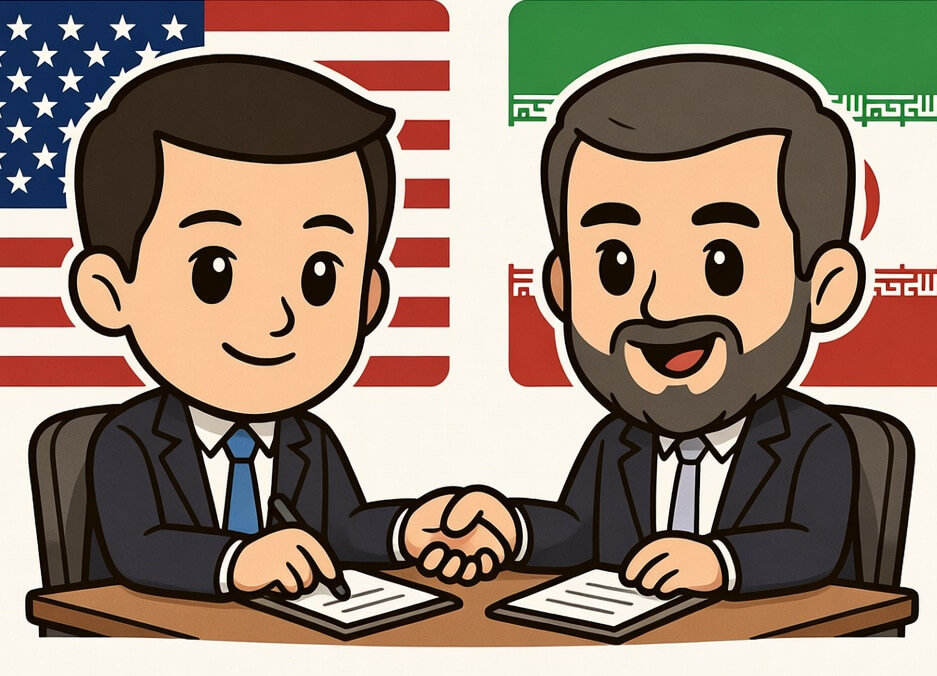
The deal announced Monday is an interim agreement — not a final peace treaty. The two sides agreed to a 14-point plan that extends their ceasefire by two months and sets the terms for reopening the strait. Once a memorandum of understanding (MOU) — a formal written agreement between governments — is signed in Switzerland on Friday, Iran is supposed to reopen the strait and the US would lift its blockade of Iranian ports.
The next step after signing would be fresh negotiations over Iran’s nuclear enrichment program, which the US wants restricted for at least 15 years. Qatar and Pakistan brokered the deal. Israel, which participated in the initial strikes on Iran alongside the US in late February, is not party to the talks and has expressed concern the agreement gives too much to Tehran.
What Happened to Oil Prices — and Why Does It Matter?
Crude oil prices dropped sharply on the news. Brent crude — the international benchmark for oil — fell $4.39, or 5%, to $82.94 a barrel, Reuters reported, reaching its lowest level since March 10. WTI, the US crude benchmark, fell a steeper 5.4% to $80.26. Both contracts are still about 40% above where they started 2026.
The price drop matters for forex traders because energy costs feed directly into inflation — the rate at which everyday prices rise. Higher oil means higher gasoline, higher shipping costs, and higher prices for goods across the economy. When energy prices fall, that takes pressure off central banks like the US Federal Reserve, which raise interest rates to fight inflation.
Importantly, oil markets are not fully pricing in a clean resolution yet. Nearly 600 ships remain stranded in the Persian Gulf. A Reuters analyst at PVM Oil Associates warned that resuming full traffic “will take time” and estimated the process could take weeks to months. The US and other Western nations also need to rebuild emergency oil stockpiles drawn down at a record pace during the crisis — meaning demand for oil is likely to stay elevated even after the strait reopens.
Have a solid trading strategy but lack the capital? FundedNext empowers disciplined traders by providing simulated trading accounts up to $200K.
Unlike other prop firms, FundedNext imposes no artificial time limits on challenges. You even earn a unique 15% profit share during your evaluation! Once funded, you keep up to a 95% profit split with guaranteed 24-hour payouts. Trade CFDs or Futures your way—even during major news events.
Join over 400K traders who have received $300M+ in payouts. Ready to back your edge?
Learn More About FundedNext! Limited time offer: Use code BPFN for discounts on both CFD & Futures plans! T&C apply. T&C apply.Disclosure: We may earn a commission from our partners if you sign up through our links, at no extra cost to you.
Is the Strait Actually Open Yet?
Not officially. The formal reopening is tied to the MOU signing on Friday, June 20. Once signed, Iran is required to allow vessels to pass free of charge — but only for 60 days. After that, Iranian state media reported that Tehran plans to charge fees for safety, navigation, environmental, and insurance services.
US Vice President JD Vance pushed back directly on that plan in an interview on CNBC’s Squawk Box. “Our expectation is that the strait is going to be opened in a toll-free way for the long term,” Vance said, adding that the toll issue would be resolved in upcoming technical negotiations. The US, Europe, and Gulf states have all objected to Iran charging fees for what most of the world considers international waters.
There is also a physical complication: Iran laid sea mines in the strait during the war, according to the Associated Press. The MOU requires demining the strait before full commercial traffic resumes. The UK and France have finalized plans to lead a multinational mine-clearing mission, with up to 40 partner nations involved.
What Does the Hormuz Deal Mean for the US Federal Reserve?
The Federal Reserve (the Fed) is the US central bank. It controls interest rates to manage inflation and economic growth. Higher interest rates tend to strengthen the US dollar (USD); lower rates tend to weaken it.
Markets reacted to Monday’s deal with a clear drop in US government bond yields. According to CNBC, the 10-year Treasury yield fell more than 2 basis points to 4.459%, while the 2-year yield — which tracks the Fed’s rate path most closely — dropped more than 3 basis points to 4.054%. A basis point is one-hundredth of a percentage point (0.01%). When yields fall, it means investors expect less pressure on the Fed to raise rates.
But analysts caution this is early-stage optimism. Oil is still up 40% year-to-date. The Fed is unlikely to pivot based on a deal that hasn’t been formally signed and could still break down. The real test comes in the weeks after Friday — whether ships are actually moving freely, whether oil prices keep falling, and whether inflation data starts to reflect the relief.
What Does the Hormuz Strait Deal Mean for Forex Traders?
The deal created a risk-on environment — a market condition where investors feel more confident and move money away from safe-haven assets (like the US dollar, Japanese yen, and Swiss franc) and toward higher-yielding or riskier assets. According to CNBC’s live market updates, equities jumped sharply at the open, with airlines and cruise stocks leading gains as oil fell.
For the USD, the picture is mixed. A drop in energy-driven inflation reduces the case for further Fed rate hikes, which is a bearish (weakening) signal for the dollar in the near term. But the dollar often strengthens during geopolitical crises — meaning a resolution can paradoxically cause some dollar softness as the crisis premium unwinds.
Currencies tied to oil exports — such as the Canadian dollar (CAD), Norwegian krone (NOK), and Russian ruble (RUB) — may face downward pressure as crude prices fall. Meanwhile, energy-importing economies — like Japan (JPY) and the Eurozone (EUR) — could see some relief as the input cost of oil eases. The key variable for all currency pairs is whether the Friday signing actually holds and oil continues to fall, or whether the deal collapses and prices spike again.
Frequently Asked Questions About the US-Iran Hormuz Strait Deal
What is the Strait of Hormuz and why does it matter for markets?
The Strait of Hormuz is a narrow waterway connecting the Persian Gulf to the open ocean. About 20% of the world’s oil and liquefied natural gas (LNG) passes through it, according to NPR. When Iran disrupted the strait after the war began on February 28, global energy prices surged — adding to inflation pressures worldwide and forcing central banks to reconsider their rate paths.
What exactly did the US and Iran agree to on June 15?
The two sides agreed to a 14-point interim plan to extend their ceasefire by two months and reopen the Strait of Hormuz. A formal MOU is set to be signed in Switzerland on Friday, June 20. Once signed, Iran would reopen the strait and the US would lift its blockade of Iranian ports. The two sides will then begin a new round of negotiations on Iran’s nuclear program.
Why are oil prices still elevated even after the deal?
Brent crude is down roughly 5% on Monday but still about 40% higher than at the start of 2026, per Reuters. The deal has not been signed yet, the strait has not officially reopened, and Iran’s sea mines must be cleared before full commercial traffic resumes. On top of that, the US and other countries need to replenish emergency oil reserves drawn down during the crisis — keeping demand elevated even as supply restrictions ease.
How does this deal affect the US dollar and other currencies?
Lower oil prices reduce inflationary pressure, which eases the case for the Fed to raise rates — and lower rate expectations typically weigh on the USD. US Treasury yields fell across the board on Monday, per CNBC, consistent with markets pricing in a less aggressive Fed. Oil-exporting currencies like the Canadian dollar may also soften as crude prices fall. Energy-importing economies like Japan and the Eurozone could see their currencies benefit from lower energy costs.
What are the biggest risks that could reverse the market rally?
The agreement has several unresolved issues: neither side has released the full text, Israel opposes the deal and continues operations against Hezbollah in Lebanon, and Iran wants to charge tolls after 60 days of free transit — which the US has not agreed to. Bloomberg Economics analysts noted it is “far from certain that any peace will be lasting,” and warned that all sides are likely using any ceasefire to prepare for potential future conflict. A breakdown in talks before or after Friday would likely send oil prices sharply higher again.
When oil prices fall sharply on geopolitical news, the cascade through Treasury yields to currency pairs can look random unless you understand what’s actually happening. Premium members can read our lesson:
📖 What Is Intermarket Analysis?
Reading this helps you understand how oil, bond yields, and currencies move as an interconnected system, why certain currencies benefit when energy costs fall, and how to read these relationships before they move your charts.
And if you’re not a Premium subscriber yet, consider joining.
With Babypips Premium, you get full access to School of Pipsology lessons that help you understand how oil prices drive inflation expectations, how those expectations reshape central bank rate projections, and how those projections