Andy Burnham walked into Downing Street on Monday and said two words that cost Sterling traders real money.
“Any flexibility.”
He was talking about fiscal rules, and the gilt market had thoughts.
U.K. 10-year yields jumped 9 basis points to 5.04%. The 30-year hit 5.75%, its highest in two months. The pound slipped. The new Prime Minister hadn’t even named his Chancellor yet!
If you watched GBP/USD move on the back of a press conference with no rate decision, no data release, and no central bank involved, you just saw bond vigilantes in action. Here’s what that actually means.
What Is a Bond Vigilante?
Gilts are U.K. government bonds, essentially IOUs the government sells when it needs to borrow money. Buy one and you’re lending to the British state in exchange for regular interest payments.
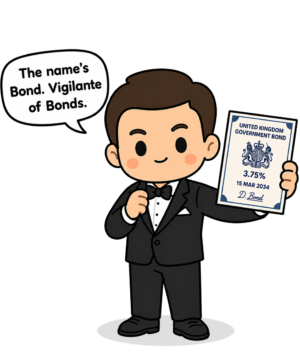 Bond vigilantes are investors who push back when they think a government is getting too loose with its finances. They do it by selling government bonds.
This selling pushes gilt prices down and yields up, which means the government has to pay more to borrow.
If yields rise far enough, the math starts to break and spending plans that once looked manageable suddenly don’t.
No election. No long policy fight. Bond vigilantes simply attempt to raise the bills.
U.K. gilt yields were already the highest in the G7 before Burnham said a word, and that wasn’t by accident. Government borrowing jumped roughly 30% year on year in May 2026, coming in about £18.8 billion above forecast, while debt interest payments alone reached £11.7 billion.
The fiscal picture was already stretched, so the bond market didn’t need much of an excuse to react. Burnham gave it one.
What Did Burnham Actually Say?
On his first day in office, Burnham told reporters he would seek “any flexibility” within the government’s borrowing and spending rules. He also floated raising tax-free income thresholds and said he was prepared to spend some of his political capital tackling Britain’s social care crisis.
It seems like markets are sensitive to anything related to fiscal rules, so that was all it took to get the bond market’s attention.
There’s history behind that sensitivity. In October 2022, Prime Minister Liz Truss unveiled unfunded tax cuts in a mini budget that sent gilt yields soaring and forced the Bank of England to step in before pension funds began collapsing. Truss lasted just 45 days.
Burnham didn’t announce anything close to that, but markets didn’t need a repeat performance to get nervous. A prime minister who had already criticized the previous government for bowing to bond markets had now raised the possibility of fiscal flexibility. Traders filled in the blanks.
The 10-year gilt yield climbed 9 basis points to 5.04%, while the 30-year yield rose by the same amount to 5.75%. Sterling weakened against both the dollar and the euro.
That’s how bond vigilantes operate. They don’t wait for the budget details. They start pricing the risk as soon as the language changes.
Promoted: Fiscal headlines can move gilt yields and Sterling before the full policy details even arrive.
Stay on top of the comments, bond market reactions, and breaking news that can reshape GBP setups in real time.
Join FinancialJuice for Free to learn more!
Disclosure: We may earn a commission from our partners if you sign up through our links, at no extra cost to you.
Why Does a Gilt Selloff Weaken the Pound?
This is where the relationship between yields and currencies can get confusing, because rising yields don’t always hurt a currency.
When yields climb because the economy is strong and markets expect higher interest rates, the currency often rises with them. Foreign investors are drawn to the better returns, creating more demand for that country’s currency. That’s the healthy version of a yield increase.
Monday’s move was different. Gilt yields rose because investors were becoming more concerned about the government’s finances. In that situation, higher yields reflect greater risk rather than a more attractive economic outlook. Investors demand extra compensation to hold U.K. debt, while some capital leaves the country altogether. Sterling can therefore weaken even as yields rise.
That distinction matters whenever a headline says yields are climbing. The direction alone doesn’t tell you much. You need to know why they’re rising.
EUR/GBP is often the cleaner pair to watch in this kind of story because it removes the dollar from the equation and puts the focus on the U.K. GBP/USD also reflects whatever is happening with the greenback. On Monday, EUR/GBP rose while GBP/USD fell, meaning Sterling weakened against both currencies. When that happens, the pressure is more likely coming from the U.K. rather than from a broad dollar move.
There’s another complication. The Bank of England sets official interest rates, but a gilt selloff driven by fiscal concerns can tighten financial conditions without any action from the central bank. Higher government borrowing costs can spill into mortgages, business loans, and other parts of the economy, slowing growth and making the BOE’s job more difficult.
In this case, one press conference on Burnham’s first day was enough to raise questions about both fiscal policy and the outlook for Sterling.
Quick Takeaways
- Bond vigilantes are investors who sell government bonds when fiscal discipline looks shaky, pushing yields higher and raising borrowing costs without any policy vote required.
- Not all yield spikes mean the same thing. Yields rising on strong growth tend to support a currency. Yields rising on fiscal fear tend to weaken it. The “why” matters more than the move itself.
- EUR/GBP isolates U.K.-specific risk better than GBP/USD on a day like this, because it removes the dollar variable. Both pairs moving against Sterling simultaneously points to a U.K.-driven story.
- The autumn Budget is the real test. Monday’s reaction was a warning shot. The chancellor appointment and the November spending decisions are where the gilt market’s concern either fades or firms up into something larger.
What Should Traders Watch For?
The U.K. Employment Situation Report lands Tuesday, July 22, at 6:00 AM GMT, and the gilt market’s reaction to it may signal whether Monday’s fiscal anxiety is still in the driver’s seat.
U.K. CPI follows Wednesday. Longer term, watch how long-dated gilt yields respond to the chancellor announcement and any early Budget signals. Those moves in the 10-year and 30-year will likely tell you more about Sterling’s medium-term path than any single GBP/USD candle.
This article explains how bond vigilantes drove gilt yields higher and weakened the pound, a bond-to-currency connection that many developing traders haven’t studied yet. Premium members can read our lesson:
📖 How Bond Yields Affect Currency Movements
Reading this helps you understand why higher yields attract foreign capital in some conditions, why fiscal-fear yield spikes weaken a currency rather than strengthen it, and how to read the gilt market as a forward signal for sterling moves.
And if you’re not a Premium subscriber yet, now’s a good time to sign up.
With Babypips Premium, you get full access to School of Pipsology lessons that help you understand not just what gilt yields are doing, but why the same yield move can mean completely different things for a currency depending on what’s driving it.