


Oil swung on Iran headlines Thursday, and chipmakers led the S&P 500 lower after a report on OpenAI’s revenue. The 10-year Treasury yield touched 5.35% in the European morning and ended near 5.23%. Gold gained, Bitcoin slipped, and the dollar fell against six of the seven major currencies.
Check out the forex news and economic updates you may have missed in the latest trading session!
News Headlines & Data:
- Japan Current Account for August 2026: 4,062.0B (3,100.0B forecast; 2,989.0B previous)
- Australia Consumer Inflation Expectations for October 2026: 5.3% (5.0% forecast; 4.9% previous)
- Japan Eco Watchers Survey Outlook for September 2026: 47.4 (48.0 forecast; 48.3 previous)
- Germany Balance of Trade for August 2026: 19.5B (19.5B forecast; 21.3B previous)
- U.S. Initial Jobless Claims for October 3, 2026: 197.0k (200.0k forecast; 197.0k previous)
- U.S. Wholesale Inventories for August 2026: 0.5% m/m (0.7% m/m forecast; 1.3% m/m previous)
- U.S. Atlanta Fed GDPNow: 3.6% (3.7% previous)
- Trump said the U.S. will not attack Iran before the Nov. 3 midterm elections, a day after reports that the administration was preparing for renewed strikes
- OpenAI told investors its annualized revenue was nearing $50 billion, about $20 billion below a figure that circulated last month
- Fed Governor Christopher Waller said Thursday morning that he anticipates additional hikes if the data meet expectations, though they need not come at consecutive meetings.
- St. Louis Fed President Alberto Musalem said in the afternoon that the Fed needs more policy firming.
Broad Market Price Action:
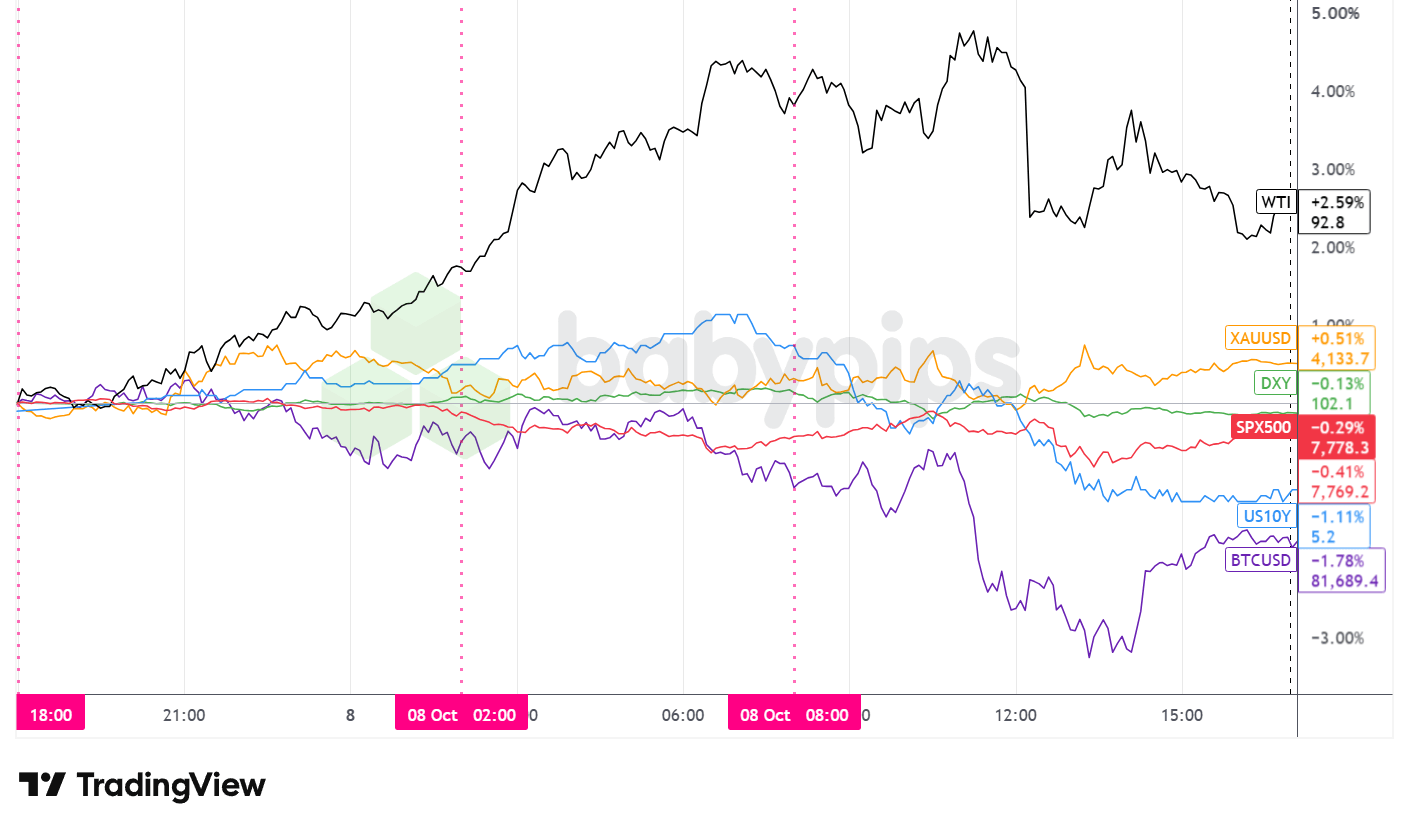
Dollar Index, Gold, Oil, S&P 500, U.S. 10-yr Yield, Bitcoin Overlay – Chart Faster With TradingView
WTI crude oil rose 2.6% to near $92.80 a barrel, and Middle East headlines drove most of the day’s swings. Prices climbed overnight and through the European morning as reports pointed to renewed supply risk: the Pentagon told U.S. Central Command to prepare for a possible resumption of Iran strikes, projectiles hit a tanker off Qatar, and the Houthis claimed a missile attack on Riyadh’s airport, which Saudi Arabia had not confirmed. Oil peaked near $94.80 in the late morning and dropped about $1.50 within minutes around midday, the same window as Trump’s post saying the U.S. will not attack Iran before the Nov. 3 midterm elections. The speed of the drop suggests that a share of the price reflected the risk of a U.S. attack. Unverified reports of explosions in the Strait of Hormuz and a storm approaching the Gulf of Mexico, where Chevron and Shell began shutting in production, may have supported a bounce in the afternoon. Oil ended below its high and above Wednesday’s level.
The 10-year Treasury yield rose with oil overnight and touched a high near 5.35% in the European morning. Higher oil may have fed inflation worries and strengthened the case for more Fed rate hikes, and the 30-year yield held above 5.70% in European trading, near multi-decade highs. Yields eased from those highs as oil and stocks declined. At 1:00 pm ET, the Treasury sold $22 billion of 30-year bonds at a high yield of 5.618%, in line with the pre-auction level, and the bid-to-cover ratio of 2.54 beat its average near 2.41. Solid demand at those yields may have helped steady the long end. The 10-year yield ended near 5.23%, about 6 basis points lower on the day.
Fed Governor Christopher Waller said Thursday morning that he anticipates additional hikes if the data meet expectations, though they need not come at consecutive meetings. St. Louis Fed President Alberto Musalem said in the afternoon that the Fed needs more policy firming but stopped short of backing a move this month. Yields showed little reaction, which may mean traders had priced in an October pause after Fed Vice Chair Philip Jefferson and New York Fed President John Williams signaled patience last week.
The S&P 500 fell 0.4% to near 7,770, and the decline came in two stages. Stocks weakened overnight and in Europe as oil and yields rose, a combination that can squeeze equity valuations and tighten financial conditions. The index recovered to near 7,793 in the late morning as yields eased from their highs. The second stage began around 12:45 pm ET, when the index dropped about 16 points in five minutes. That slide may have followed a report that OpenAI told investors its annualized revenue was nearing $50 billion, about $20 billion below a figure that circulated last month. Chipmakers took the biggest hit: the Nasdaq 100 fell 1.4% and a gauge of chipmakers sank 3.4%. The selloff revived worries that AI spending will not pay off while borrowing costs rise, and elevated Treasury yields raise the cost of capital for AI projects. The gap between the two revenue figures may reflect differences in how AI companies count revenue. The S&P 500 bottomed near 7,737 around 1:25 pm ET and recovered to near 7,770 into the close.
Gold rose 0.5% to near $4,134 an ounce, rebounding from a two-month low, and it moved opposite to yields and the dollar for most of the day. The metal climbed overnight as the dollar index eased, gave back its gains in the European morning as the 10-year yield and the dollar climbed, and returned to near $4,143 after midday as both fell. That pattern fits a familiar relationship: higher yields raise the cost of holding a metal that pays no interest, and lower yields reduce it.
Bitcoin fell 1.8% to near $81,700, and its path resembled the S&P 500’s. It drifted lower overnight and in Europe as yields firmed and slid to near $81,150 by late morning. Bitcoin reached a low near $80,450 at 1:20 pm ET, about 35 minutes after the S&P 500 began sliding, and recovered to near $81,700 into the close. Two senior Ethereum researchers warned that advances in AI-driven mathematics could undermine the cryptography protecting crypto wallets sooner than the industry expects, which may have added to caution in crypto during Asian trading. Bitcoin may have traded as a risk asset on Thursday, sensitive to tech-stock sentiment and Treasury yields, a mix that can pressure speculative assets.
FX Market Behavior: U.S. Dollar vs. Majors
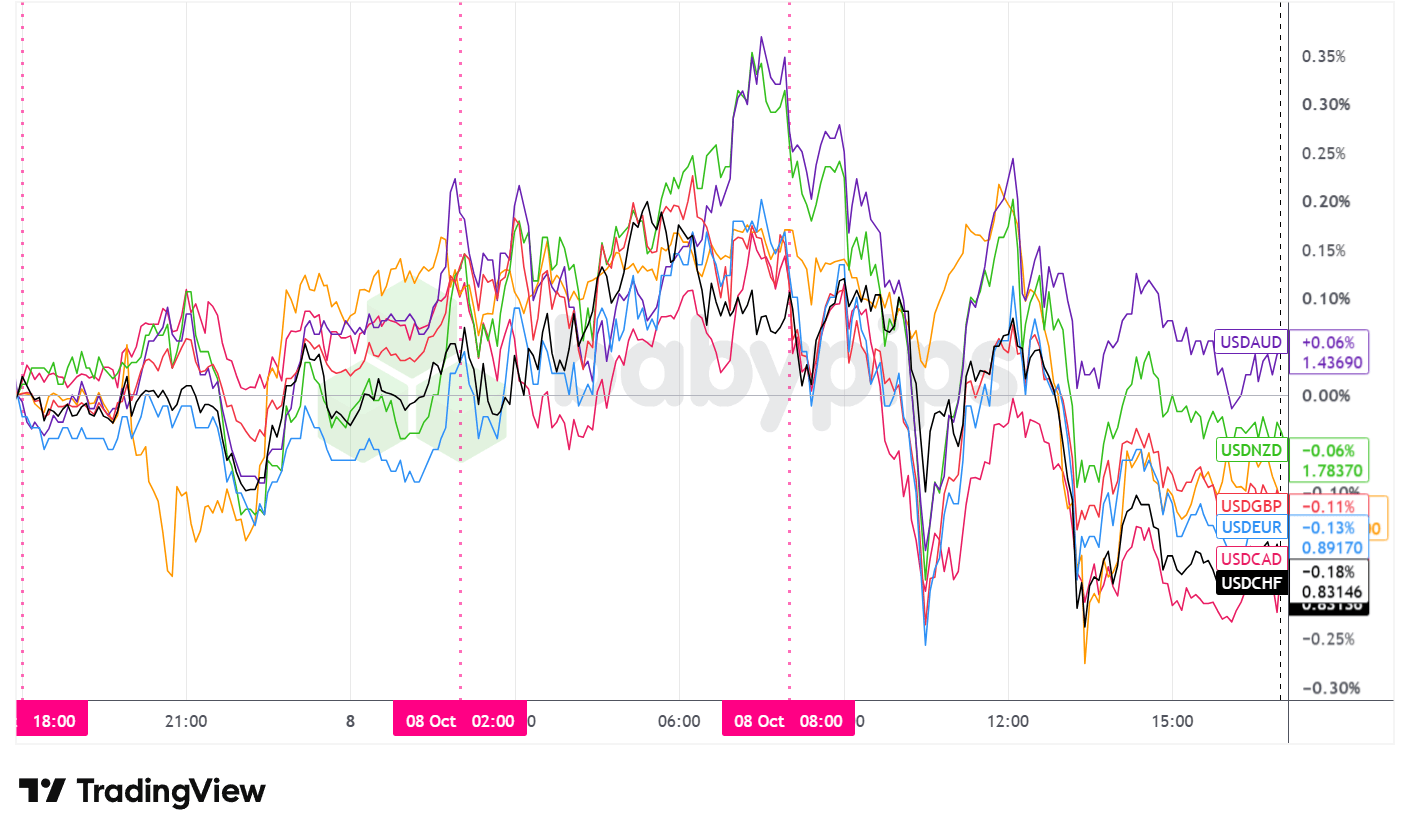
Overlay of USD vs. Major Currencies – Chart Faster With TradingView
The dollar’s day appeared to split in two. Rising Treasury yields, fueled by oil-driven inflation worries, supported it overnight and in Europe, and falling yields and a tech selloff weighed on it in New York. It finished lower against six of the seven majors. The U.S. Dollar Index slipped 0.13% to near 102.1.
The dollar rose against all seven majors in the Asian session, with the Australian dollar weakening the most. The Australian dollar tends to lose ground when traders grow cautious about risk and global growth, and Middle East reports that lifted oil may have encouraged that caution. A rise in Australian consumer inflation expectations can raise bets on tighter central bank policy, but the currency showed little reaction. Japan’s current account surplus beat forecasts and may have supported the yen, but USD/JPY returned above 158 before the session ended, which may point to the pull of higher U.S. yields.
The dollar extended its gains against six of the seven majors in the London session as Treasury yields climbed to their highest levels of the day. Oil near $94 reinforced inflation worries, and the New Zealand dollar lost the most ground. The euro slid to its weakest level of the day near 1.1177. French fiscal concerns, with the French 10-year yield near 4.94%, may have added to the pressure, since worries about one euro-area government’s finances can weigh on the shared currency. Germany’s trade surplus matched forecasts and seems to have given the euro no support. Sterling was the lone major to gain against the dollar, but a 0.02% move offers little to read into.
The dollar reversed in the U.S. session and fell against all seven majors, with the Canadian dollar gaining the most at about 0.3%. Falling Treasury yields appeared to drive much of the shift. As the 10-year yield dropped toward 5.23%, the yield advantage that had supported the dollar narrowed, and the yen and Swiss franc, which tend to gain when U.S. yields fall and traders turn defensive, rose about 0.3% each. Oil’s retreat after Trump’s post may have eased inflation worries and helped pull yields lower, and WTI’s 2.6% gain on the day may have supported the loonie as the broader dollar slipped.
The tech selloff after the OpenAI revenue report may have added to the dollar’s weakness. One argument is that AI-related equity flows have helped support the dollar this year, so a slide in chipmakers could unwind some of that support. The dollar gained 0.06% against the Australian dollar, the lone major to lose ground, which may reflect risk-sensitive currencies struggling to recover as tech stocks fell.
Upcoming Potential Catalysts on the Economic Calendar
- Japan Household Spending for August 2026 at 11:30 pm GMT
- Japan Machine Tool Orders for September 2026 at 6:00 am GMT
- Swiss Consumer Confidence for September 2026 at 7:00 am GMT
- Canada Employment Update for September 2026 at 12:30 pm GMT
- ECB Schnabel Speech at 1:30 pm GMT
- University of Michigan Consumer Sentiment Index for October 2026 at 2:00 pm GMT
- U.S. Fed Collins Speech at 8:00 pm GMT
Canada’s September jobs report arrives after the loonie led the majors on Thursday, and USD/CAD may react to the data and to oil. The University of Michigan survey at 10:00 am ET includes consumer inflation expectations, a data point that may matter to a Fed whose officials have signaled more hikes ahead.
Iran headlines remain a swing factor for oil, since Trump’s pledge covers the period before the Nov. 3 elections and the reports from the Strait of Hormuz are unverified.
Stocks, Bitcoin and the dollar fell together on Thursday afternoon, so chipmakers may set the tone for all three. U.S. consumer price data on Oct. 14 and the Fed’s Oct. 27-28 meeting follow.
This market recap showed stocks, oil, bonds, cryptocurrencies, and currency pairs all moving together as risk sentiment shifted from risk-on to risk-off during the session. Most traders track individual prices—but don’t understand the force connecting them. Premium members can read our lesson:
📖 Risk-On / Risk-Off: How Market Mood Moves Currencies
Reading this helps you understand how market mood drives currency moves, which pairs react most when risk sentiment shifts, and how to spot those shifts before they hit your chart.
And if you’re not a Premium subscriber yet, consider joining Premium today.
With Babypips Premium, you get full access to School of Pipsology lessons that help you understand not just which prices move, but which assets move together and why those relationships shift throughout your trading session.
AI disclosure: A Babypips editor researched and directed this article, and AI tools helped analyze the intraday price data, research sources, initiate the draft, before a Babypips editor did the final review and edit. AI tools can misread data, make arithmetic errors, and state wrong information in a confident tone. Prices, levels, and percentage moves here are approximate because the market data was not captured at the exact close, so check the figures against your own data source before you rely on them. The explanations for market moves are possible reasons, not confirmed causes. This article is for education and is not a recommendation to trade.