News
Daily Broad Market Recap – February 13, 2025
The major assets took cues from their individual catalysts as traders priced in trade war concerns, increased oil demand projections, and at least one Fed rate cut this year.
Read MoreFrom basic trading terms to trading jargon, you can find the explanation for a long list of trading terms here.

Find out just how much you've learned by taking any of our 50+ trading quizzes. You can even see how your scores compare to others!

Learn how to trade forex in a fun and easy-to-understand format. Track your progress and learn at your own pace.

In our crypto guides, we explore bitcoin and other popular coins and tokens to help you better navigate the crypto jungle.

Decryptopedia™ helps you decipher crypto jargon back into plain English. Learn the terms that you’ll come across on your crypto journey.

Find out just how much you’ve learned in our School of Crypto by taking our crypto quizzes. How will you score against other quiz takers?

Learn about crypto in a fun and easy-to-understand format. Track your progress and learn at your own pace.

Our Currency Correlation Calculator helps you identify the strength of relationships between currency pairs.


Instantly find out whether the forex market is open or what the current trading session is based on your local timezone.


Our Risk-On/Off Meter helps you gauge risk sentiment of the market & make trades best suitable to the current market conditions.


Determine significant support and resistance levels with the help of pivot points.


Our gain and loss percentage calculator quickly tells you the percentage of your account balance that you have won or lost.


Determine the value per pip in your trading account's currency so you can better manage your risk per trade.


Find the approximate amount of currency units to buy or sell so you can control your maximum risk per position.


The major assets took cues from their individual catalysts as traders priced in trade war concerns, increased oil demand projections, and at least one Fed rate cut this year.
Read More
With inflation components showing moderation and labor market conditions holding firm, traders maintained their Fed rate cut expectations despite the hot PPI readings.
Read More
The stronger U.S. inflation print added another hurdle for the Fed and kept investors on edge about the timing of the first interest rate reduction.
Read More
Consolidation was the name of the game early in the day, as market players were biting their nails ahead of the U.S. CPI release. Here’s how asset classes reacted to the inflation figures and other major headlines.
Read More
Market correlations appeared to break down once again, as asset classes struggled to find direction ahead of Powell’s and Trump’s testimonies. Here are the latest updates you need to know!
Read More
Can another set of cooling inflationary pressures convince the Fed to shift back to a more dovish stance? Or will we see strong CPI figures that could reinforce their hawkish views?
Read More
Asset classes and major forex pairs were all over the place, as the prospect of more U.S. tariffs kept market watchers on edge. Here are the latest economic updates and headlines you need to know!
Read More
Tariffs headlines drove market sentiment for most of the week, although there were other positive developments that brought some risk-on vibes. Here’s how major asset classes fared.
Read More
The BOE policy decision took the spotlight with its surprise “dovish split” while U.S. jobs indicators kept markets on edge ahead of this week’s NFP release. Here are the latest headlines you need to know!
Read More
The Bank of England (BOE) reduced its benchmark interest rate by 25 basis points to 4.50%, marking its first rate cut since late 2024 while the MPC minutes revealed a more dovish split than expected.
Read More
With the Fed shifting to a less dovish stance, will the upcoming U.S. jobs release support their optimistic outlook? Or can the numbers revive easing expectations?
Read More
The U.S. ISM services PMI fell from 54.1 to 52.8 in January instead of rising to the projected 54.2 figure, reflecting a slower pace of growth for the month.
Read More
The major assets shrugged off economic data releases in favor of pricing in global trade headlines, central bank commentary, and overall risk sentiment.
Read More
The major assets bounced back on Tuesday as Trump delayed tariffs on Mexico and Canada, though trade tensions with China kept investors cautious.
Read More
After keeping rates steady in a “dovish hold” decision last December, will the BOE finally resume its easing cycle this time? Here’s what you need to know if you’re planning on trading this top-tier event.
Read More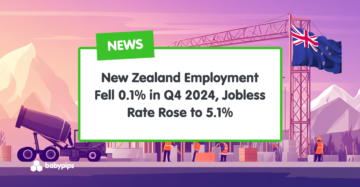
New Zealand reported a 0.1% quarter-on-quarter dip in employment for Q4 2024, smaller than the projected reduction of 0.2%, but the unemployment rate still rose from 4.8% to 5.1% as expected.
Read More
Tariff fears and headlines dominated price action on Monday, as traders looked for updates over a potential trade war.
Read More
The January ISM manufacturing PMI turned out better than expected, as the reading returned to expansion after 26 consecutive months in contraction. Here’s how USD reacted.
Read More
It was a busy trading week filled with a bunch of major central bank decisions and top-tier inflation data that influenced policy expectations. Read on to find out which headlines pushed major currencies around.
Read More
The major assets traded mixed as traders priced in the ECB’s rate cut, Uncle Sam’s disappointing GDP, and threats of the U.S. imposing tariffs on Canadian and Mexican products.
Read MoreInstead of being bothered by losing on a trade, you’re proud that you can take these small losses that prevent a large loss from accumulating. In that light, taking a loss on a trade is not a sign of a defect but rather a reflection of a personal strength that explains why you have been successful in the long run.Peter L. Brandt