


A judge called unemployed young Indians “cockroaches.”
BIG mistake.
Turns out, calling a generation pests is a bad idea when that generation makes up most of your country.
India is home to one of the youngest populations on earth. Nearly 65% of its 1.4 billion citizens are under the age of 35.
That’s an enormous economic opportunity, but only if those young people have jobs, a functioning education system, and a cost of living they can manage.
Right now, millions of them feel they have none of the three. So they formed a party.
A Cockroach Party.
Wait, a Cockroach Party?
Yes, really.
The Catalyst
On May 15, 2026, India’s Chief Justice Surya Kant made the following remarks from the bench during an open court hearing:
“There are youngsters like cockroaches, who don’t get any employment or have any place in the profession. Some of them become media, some of them become social media, RTI activists and other activists, and they start attacking everyone.”
Reports also quoted him referring to these youngsters as “parasites of society.”
He later clarified that his remarks had been misquoted and were directed specifically at individuals entering the legal profession with fake degrees.
The clarification did little to contain the reaction.
The Backlash
The comment struck a raw nerve because it landed on top of a very real crisis.
Indian youth account for nearly 83% of the country’s total unemployed population.
When a judge appeared to dismiss that generation as pests, millions felt it personally.
The Movement
The next day, unemployed 30-year-old Abhijeet Dipke posted on X: “What if all cockroaches come together?”
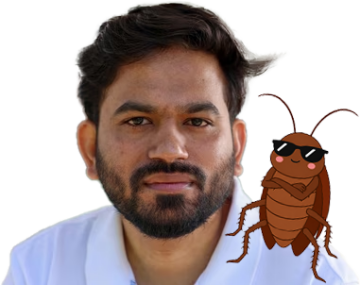
Within 24 hours, he’d launched the Cockroach Janta Party (CJP).
The movement immediately struck a chord with Gen-Z and millennial Indians.
The name was a deliberate parody of the ruling Bharatiya Janata Party (BJP).
He invited all “unemployed, lazy, and chronically online” youth to join a new platform.
The Meme
The CJP exploded. Over 350,000 people signed up through a Google form.
The hashtag #MainBhiCockroach (“I too am a cockroach”) spread across every platform.

What began as internet memes and AI-generated imagery quickly transitioned into the physical world.
Young volunteers turned up dressed as cockroaches at protests and clean-up drives.
The movement now has over 22 million Instagram followers and more than one million registered members, surpassing the follower counts of India’s main political parties.
Dipke turned down job offers in the U.S. and announced he’s flying back to India to lead a peaceful protest at Jantar Mantar in New Delhi.
The Crackdown
Citing national security concerns, the Indian government ordered X to withhold the CJP’s primary account inside India.
The movement’s response?
They launched a new handle called “Cockroach is Back“, with their first post reading: “You thought you can get rid of us? Lol!”
Turns out cockroaches are hard to kill.
So why does any of this matter beyond social media?
Before We Talk Rupees, Let’s Talk People
It’s easy to chuckle at the cockroach memes and jump straight to the rupee.
But the frustration here is real and worth understanding.
The Exam Scandal
Just days before the Chief Justice made his remarks, India’s national medical entrance exam, the NEET, was cancelled.
Over 2.27 million students had sat that exam on May 3.
It was cancelled on May 12 after investigators found that the actual exam questions had been leaked in advance and circulated through WhatsApp groups and coaching centers.
Students who paid could memorize the answers beforehand. Students who didn’t, couldn’t.
To understand why that hit so hard, you need to know what the NEET exam means in India.
The NEET (National Eligibility cum Entrance Test) is India’s single national exam that students must pass to get into undergraduate programs to become doctors, surgeons, dentists, or practitioners of traditional Indian medicine.
Conducted by the National Testing Agency (NTA), it replaces all state-level and individual university medical entrance tests.
Getting into one of these programs is one of the most competitive goals a young person can pursue.
Students compete for roughly 110,000 seats. The acceptance rate is incredibly low, often less than 4%, meaning more than 20 students routinely fight for a spot.
Families pour years of savings into coaching programs. Students study 10 to 12 hours a day, sometimes for years on end.
When the questions are sold to those who can pay, every one of those years counts for nothing.
This has now happened repeatedly.
The minister responsible, Education Minister Dharmendra Pradhan, still has his job.
Around 800,000 people have signed a petition demanding his resignation.
The Jobs That Aren’t There
The exam scandal didn’t happen in isolation. It landed on top of a jobs crisis.
India’s national unemployment rate stood at around 5.2% in April 2026,.
Graduate unemployment runs considerably higher, particularly for those aged 15 to 29, and strong GDP headlines aren’t translating into enough jobs for that population.
The Cost of Living That Keeps Climbing
Then add everyday costs.
Domestic cooking gas prices in Delhi rose to Rs 913 per cylinder in March 2026, a steep Rs 60 increase driven by rising global energy costs.
Households are being squeezed from both ends: not enough income coming in, more money going out every month.
Put all three together and you start to understand why a judge’s throwaway remark became a national rallying cry overnight.
So What Does This Do to the Rupee?
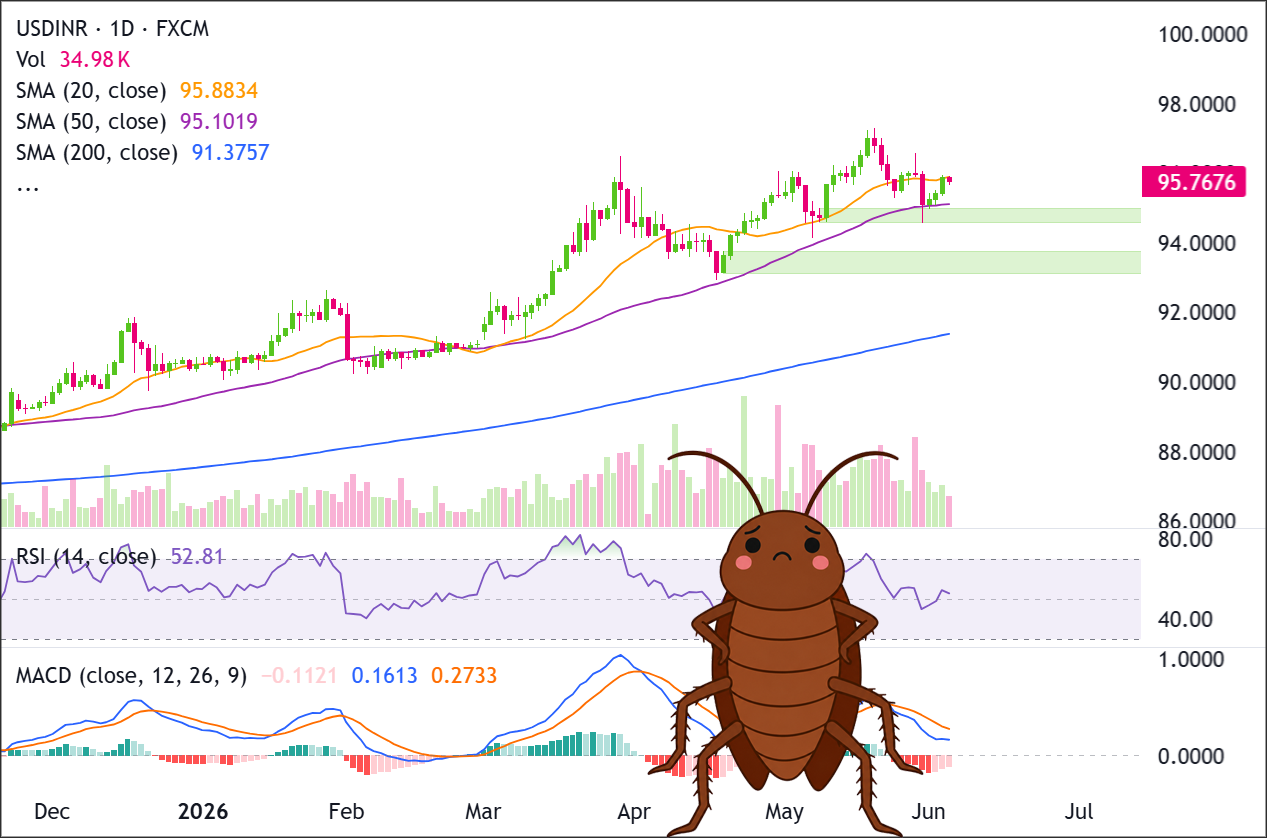
Movements of this scale don’t stay on Instagram.
They ripple outward, and one of the places they ripple to is the currency every single Indian uses every day.
This isn’t just a story for people watching currency markets.
A weaker rupee means higher prices on imported goods, fuel, electronics, and medicine.
For a young Indian already stretched thin, the rupee’s value isn’t an abstract concept.
It’s a tangible burden that impacts daily life, particularly when you are already living paycheck to paycheck.
Here are four things worth watching.
| Factor | What Happens | Effect on Rupee |
|---|---|---|
| Political unrest | Foreign investors pull back, reducing demand for rupees | Rupee weakens |
| Growth concerns | Capital inflows slow as confidence wavers | Rupee weakens |
| Fiscal expansion | Higher government borrowing widens the fiscal deficit | Rupee weakens |
| Oil prices | Import bill grows, increasing demand for USD over rupees | Rupee weakens |
1. Political Uncertainty Makes Foreign Money Nervous
Large-scale protests that make international headlines tend to prompt foreign investors to reduce their exposure to a country until the dust settles.
Less foreign money flowing into India → less demand for rupees → weaker rupee → more expensive imports for everyone.
That’s standard emerging market behavior, and India isn’t immune.
2. India’s Growth Story Is Getting Side-Eye
For years, India has attracted massive foreign investment on the strength of its fastest-growing-major-economy reputation.
That steady capital inflow has been one of the rupee’s key supports.
Visible street protests about structural unemployment and a broken exam system raise an uncomfortable question for foreign investors:
Is this growth actually reaching people?
Confidence wavers → capital pulls back → rupee faces sustained pressure.
The Reserve Bank of India can intervene around the edges, but it can’t manufacture investor confidence.
3. A Government Spending Response Could Blow Out the Deficit
If the government responds with big programs like job guarantees, education reform, or expanded subsidies, it needs to borrow more to pay for them.
More government borrowing → wider fiscal deficit → downward pressure on the rupee → more expensive imported goods → higher costs for the exact households already driving this movement.
4. Oil Ties Everything Together
India imports around 85% of its oil, making the rupee unusually sensitive to global crude prices.
With geopolitical tensions keeping oil elevated, India’s import bill is already growing.
Higher oil prices → swelling import bill → selling pressure on the rupee → weaker rupee → even pricier fuel and cooking gas → more pressure on household budgets.
What About the RBI?
The Reserve Bank of India (RBI) has the tools to defend the rupee, and with reserves hovering around $700 billion, it has the firepower to use them.
A sudden freefall from this movement alone isn’t the base case.
But the RBI can’t fix a structural jobs crisis with currency intervention.
It can buy time. But it can’t create the jobs, fix the exam system, or rebuild the trust this generation is demanding.
Those solutions have to come from somewhere else.
What to Watch Next
Dipke is returning to India this Saturday to lead a youth protest in New Delhi calling for the Education Minister’s resignation.
He’s spent the past three weeks channeling the movement’s energy into something more focused: a direct challenge to the political status quo, built on a series of school exam scandals that have exposed deep failures in India’s education system.
Turnout will matter.
A large, peaceful protest that draws international media attention could reignite foreign investor nerves and put fresh pressure on the rupee.
A muted turnout, on the other hand, may signal the movement is losing steam.
Either way, it’s the next concrete moment to watch.
The Bottom Line
By calling themselves “cockroaches,” millions of young Indians are taking an insult and turning it into a symbol of resilience.
Think of the Cockroach Janta Party as a pressure gauge, not just a protest.
It’s showing you where stress has been building for years: over unemployment, a broken education system, rising living costs, and a government that millions of young people feel has dismissed them.
Where the rupee goes from here comes down to one question:
How does the government respond?
| Government Response | Market Reaction | Likely Rupee Direction |
|---|---|---|
| Credible reforms on jobs and education | Confidence in India’s growth story restored | Stable or strengthening |
| Dismissive or heavy-handed crackdown | Political risk rises | Weakening |
| Large populist spending without reform | Fiscal deficit widens | Gradual depreciation |