


Stagflation fears continue to haunt the markets, after the U.S. GDP slowed to 1.6% and core PCE inflation held at 3.3%.
On top of that, the U.S. ISM Manufacturing PMI clocked in at 54.0, its highest reading since May 2022, as the prices component remained elevated.
Learn what stagflation means, why it’s so hard to fix, and what to watch next.
What Actually Is Stagflation?
Most economic problems run in one direction. Either the economy overheats, where growth is strong, inflation is rising, or it cools off and growth slows while prices ease.
Central banks know exactly what to do in either situation: raise rates to cool, cut rates to stimulate.
Stagflation breaks that logic entirely.
Stagflation (which is a portmanteau for stagnant growth plus inflation) is what happens when an economy slows AND prices keep climbing at the same time.
In this situation, the usual remedies contradict each other. It’s the economic equivalent of having a fever while also freezing cold: treating one makes the other worse.
The term was coined in the 1970s, when oil shocks pushed Western economies into recession even as inflation spiraled. Though in today’s case, the U.S. economy is still growing while unemployment remains relatively contained, the directional trend is uncomfortable enough that “stagflation-adjacent” has entered serious economic vocabulary.
Promoted: When the Fed Has No Easy Move, Your Trading Costs Shouldn’t Add Pressure.
Stagflation talk, hot inflation data, slowing growth, and shifting Fed odds can make markets messy fast.
Tradeify helps traders stay focused with evaluations that are a one-time purchase with no recurring charges, so you’re not racing the clock or bleeding fees while waiting for cleaner setups around NFP, inflation prints, and Fed headlines. With ~$200M paid out and growing, Tradeify gives active traders a more straightforward path to funded trading.
Learn More About Tradeify! Limited Time offer: Code “JUNE” for 35% off!
Disclosure: We may earn a commission from our partners if you sign up through our links, at no extra cost to you.
What’s Going On in the U.S. Economy These Days?
GDP Growth Slowed to 1.6% in Q1 2026
The U.S. Bureau of Economic Analysis (BEA) revised first-quarter real GDP growth down 0.4 percentage points to a modest 1.6% annualized rate. That follows a 0.5% print in Q4 2025, marking two consecutive quarters of near-stall-speed output.
Analysts pointed out that this reflected the supply shocks from tariffs and persistent geopolitical tensions in the Middle East, simultaneously generating inflationary pressure while weighing on real activity. In short, it’s more of a demand problem and not necessarily a supply one. This distinction matters enormously for what policy can realistically fix.
Core PCE Inflation Held at 3.3%
The Core PCE (Personal Consumption Expenditures excluding food and energy) is the Federal Reserve’s preferred inflation gauge. It hit 3.3% year-over-year in Q1 2026. The Fed’s target is 2.0%. According to the BEA’s second Q1 estimate, the broader PCE price index rose 4.5%, unchanged from the prior reading.
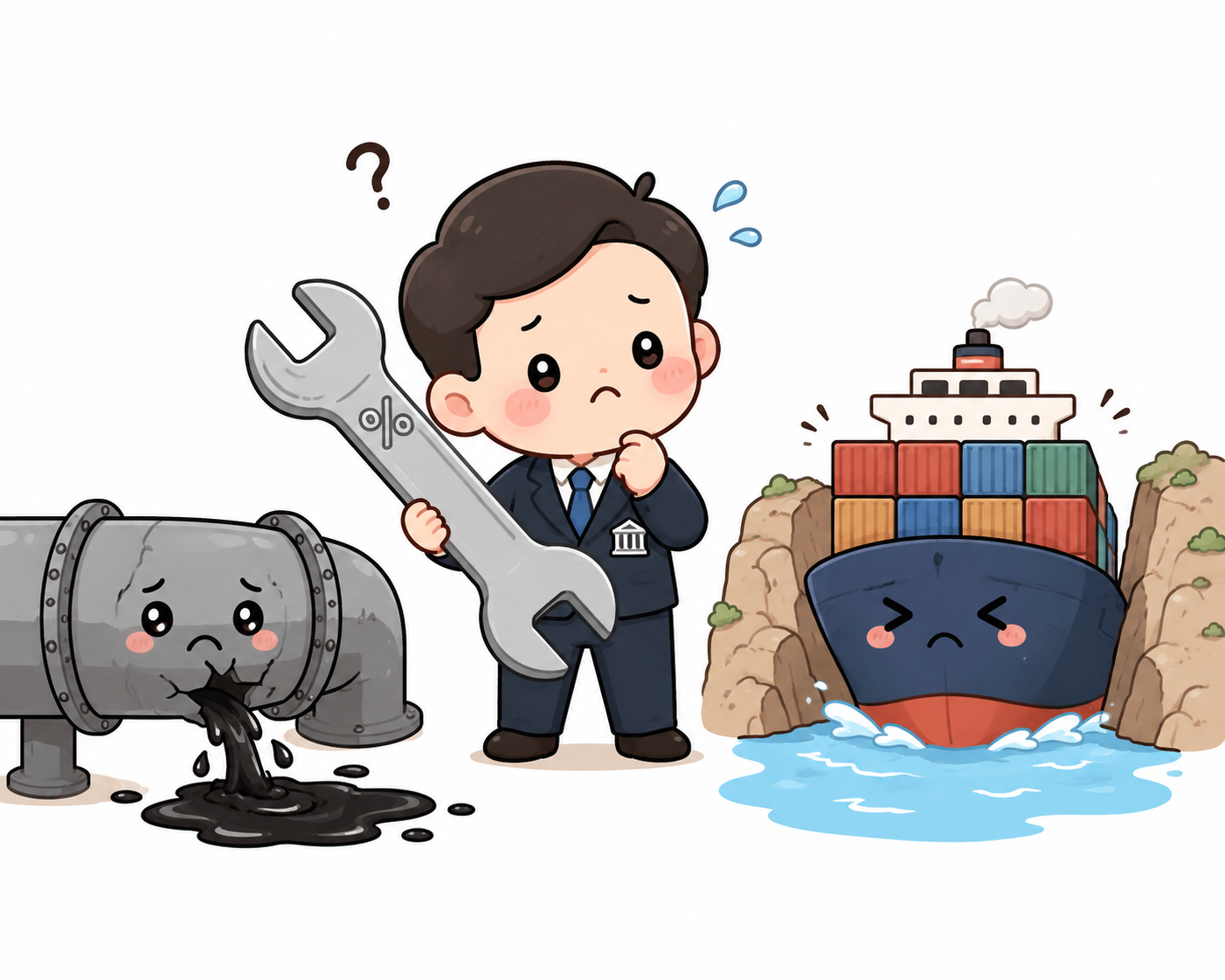 A nuance worth pointing out is that much of this inflation is cost-push (driven by supply disruptions like oil prices and shipping bottlenecks) rather than demand-pull (driven by people spending too freely).
Rate hikes are designed mainly to cool demand, but they’re merely a blunt instrument against a supply shock. You can make mortgages more expensive to slow down a hot housing market, but you can’t raise rates to reopen the Strait of Hormuz.
ISM Manufacturing PMI Hit 54.0 With Prices Still Rising
The Institute for Supply Management confirmed the factory sector grew at its fastest pace since May 2022, with new orders surging to 56.8 and production climbing to 54.3. On the surface, that sounds like healthy economic momentum.
But the ISM Prices Paid subindex sat at 82.1, and survey respondents flagged the Iran conflict and Strait of Hormuz disruptions repeatedly as major cost drivers. The economy is running, but it’s getting expensive to run. This combination of activity expanding while input costs stay high is exactly what keeps the stagflation narrative alive.
Now What, Fed?
The Federal Reserve holds two mandates: stable prices (2% inflation target) and maximum employment. In normal conditions, these goals reinforce each other.
Stagflation turns them into opponents.
The Fed’s current target rate sits at 3.50%–3.75% following a hold at the April 28–29 Federal Open Market Committee (FOMC) meeting. For most of early 2026, markets had confidently priced multiple rate cuts this year. That narrative is gone.
According to CME FedWatch data, odds of a June rate cut have collapsed below 1%. Rate hike odds, which were almost unthinkable six months ago, have been climbing steadily.
The Fed has no clean option here:
- Raise rates to fight inflation: borrowing costs rise, investment slows, consumers pull back. Effective against excess demand. This can turn out to be largely ineffective and potentially damaging against supply-driven price pressure. It risks tipping a slowing economy into something worse.
- Cut rates to support growth: cheaper borrowing stimulates activity, but with core PCE at 3.3% and climbing, easier money risks letting inflation entrench further. The Fed’s hard-won credibility could crack.
- Hold steady: buys time, but resolves nothing. Markets stay on edge. Every subsequent data print carries outsized weight.
What Does This Mean for Markets?
The U.S. Dollar: The ISM beat pushed the Dollar Index (DXY) approximately 0.24% higher on June 1 to 99.2, while 10-year Treasury yields climbed to around 4.50%. Strong data reinforces “higher for longer” rate expectations: if the Fed isn’t cutting, U.S. yields stay elevated relative to peers, attracting capital into dollar-denominated assets.
Gold (XAU/USD): Gold fell approximately 1.28% to $4,482 on June 1, despite a backdrop that would normally support safe-haven demand. The ISM-driven yield spike likely pressured it. Gold tends to move inversely to real yields (the return on bonds after adjusting for inflation). When yields jump sharply, the cost of holding non-yielding gold rises, and selling pressure tends to follow. Geopolitical fear alone couldn’t override that dynamic on Monday.
Equities: The S&P 500 extended its streak to eight consecutive sessions, closing near 7,600. Strong manufacturing data support corporate earnings, especially in industrial sectors. But if rate hike expectations keep building, valuations built on cheap-money assumptions face pressure. The index managed both tailwinds and headwinds in the same session, which tells you something about the fragile balance.
It’s also worth pointing out that the same data point can move different assets in opposite directions depending on which channel fires — the growth channel, the inflation channel, or the rate expectations channel. Stagflation environments are messy precisely because all three are competing simultaneously.
The Bottom Line
- Stagflation means sluggish growth and stubborn inflation arriving together, and it’s the macroeconomic setup that turns the Fed’s usual toolkit against itself.
- The current U.S. picture (GDP at 1.6%, core PCE at 3.3%, ISM PMI at 54.0 with a prices subindex of 82.1) isn’t exactly full-blown stagflation just yet. But the directional trend is uncomfortable enough that serious economists are no longer dismissing the word.
- Most of the inflation pressure is supply-driven, which rate hikes address poorly. That makes the Fed’s position genuinely constrained, not just rhetorically difficult.
- Markets have repriced dramatically: from multiple expected cuts at the start of 2026, to near-zero odds of a June cut, to rising probability of a hike by early 2027.
- The week’s decisive signal comes Friday, June 5 at 12:30 pm GMT — the NFP report, and specifically average hourly earnings. A 0.4%+ monthly wage print would likely read as re-acceleration regardless of the headline job number. That’s the Fed’s nightmare scenario in data form.
What to Watch For
- Tuesday, June 2 — U.S. JOLTS Job Openings (2:00pm GMT): Labor demand data setting the table for Friday’s report.
- Friday, June 5 — NFP + Average Hourly Earnings (12:30pm GMT): The week’s verdict on whether the labor market validates or challenges the stagflation narrative.
This article covers stagflation, a scenario where slowing growth and rising inflation arrive at the same time, and if you’re not clear on how inflation works and what it means for central bank policy, that context is easy to miss. Premium members can read our lesson:
📖 Inflation: The Force That Moves Central Banks
Reading this helps you understand how CPI, PCE, and PPI measure inflation, why the Fed targets 2%, and how inflation regimes like stagflation shape currency values and trading decisions.
And if you’re not a Premium subscriber yet, now’s a good time to sign up.
With Babypips Premium, you get full access to School of Pipsology lessons that help you understand not just what the data is showing, but the inflation dynamics and central bank constraints driving the Fed’s impossible position.