According to the latest non-farm payrolls release, the U.S. economy added 178K jobs in March. That’s THREE TIMES as much as the consensus of a 60K increase and the strongest jobs reading since December 2024.
The dollar’s reaction? A polite yawn.
Shouldn’t a blowout jobs number automatically send the dollar flying?
Here’s why a strong NFP doesn’t always mean a stronger USD, and what traders need to understand about the “good news is bad news” paradox.
What Actually Happened?
On Friday, April 3, the U.S. Bureau of Labor Statistics (BLS) dropped the March Nonfarm Payrolls (NFP) report. The headline number was a genuine jaw-dropper at 178,000 jobs added in March, smashing Wall Street’s consensus estimate of just 60,000. That’s more surprising than Ye selling out a concert in LA last week!
EUR/USD barely budged, ending the day near 1.1500, while the U.S. Dollar Index (DXY) held around 100.00. Womp womp.
Before we get to the dollar mystery, it’s worth unpacking why the March NFP report failed to impress.
The healthcare rebound: Of the 178,000 new jobs in March, a full 76,000 came from healthcare alone, predominantly from ambulatory health care services (+54,000). A large chunk of that reflected workers returning from a strike at Kaiser Permanente, meaning those positions were always there, just temporarily missing from February’s numbers. It’s more like a technical bounce-back rather than “new” economic growth.
February’s dark revision: The prior month’s figure was downgraded from -92,000 to -133,000 — a sobering negative revision. The labor market’s underlying trend looks considerably weaker when you factor in the revisions.
Wages cooled: This is arguably the most Fed-relevant number in the entire report. Average hourly earnings rose just 0.2% month-over-month to $37.38, pulling the year-over-year rate down to 3.5% from February’s 3.8%. Cooling wages are a signal that inflationary pressure from the labor market may be easing, which actually reduces the urgency for the Fed to keep rates high.
Market conditions: It was Good Friday. Most European and many global markets were closed for the holiday. With lower liquidity, dramatic price moves are harder to sustain, so any initial dollar reaction was quickly absorbed by shallow trading volumes.
Promoted: Capitalize on Dollar Movements Without Risking Your Own Funds.
With markets shrugging off an upbeat NFP release, market volatility can stay elevated. Why risk your personal capital during extreme volatility?
Most proprietary firms terminate your evaluation account if you execute a trade during a major headline, but FundedNext permits news trading across all models.
Test your Fed policy thesis with up to $300,000 in simulated capital, and take advantage of their Free Trial to experience the platform risk-free.
Explore FundedNext and Start Your Free Trial!Disclosure: We may earn a commission from our partners if you sign up through our links.
The “Good News Is Bad News” Paradox
Normally, the relationship between jobs and the dollar looks like this:
More jobs → stronger economy → higher inflation risk → Fed raises (or holds) rates → higher yields → investors buy dollars → USD goes up.
But we’re not in a normal environment.
Right now, markets are already pricing in an approximately 80% probability that the Federal Reserve will hold rates steady through the end of 2026, according to the CME FedWatch Tool. With rate expectations already “maxed out” on the hawkish (tight policy) side, a strong NFP number doesn’t have much new information to deliver. The market has already priced in a Fed that isn’t cutting.
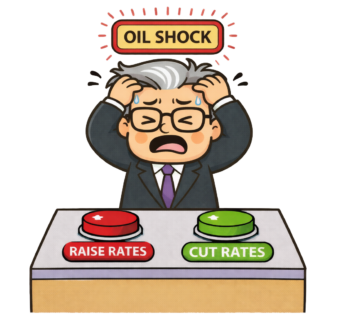 In addition, the Iran war-driven oil shock has introduced a stagflationary dynamic that has scrambled the usual forex playbook.
As Fed Chair Jerome Powell acknowledged, the oil shock will likely push inflation higher while also weighing on spending and employment. That’s a central banker’s nightmare: raise rates to fight inflation and you crush growth; cut rates to support growth, and you risk inflation running hotter.
In short, with this unusual environment, even a strong jobs print doesn’t automatically translate into expectations for even tighter policy.
The net result is a genuinely strong headline number that the market largely chose to look through — at least for now.
What Does This Mean for Markets?
For EUR/USD: The pair finished the week just above 1.1500, having seesawed through the week. The pair ticked briefly lower after the NFP headline, a small move that suggested the market acknowledged the beat, without committing to a larger dollar rally. With European markets closed for Easter Monday, the full-liquidity reaction is likely arriving in Tuesday’s London session.
For GBP/USD: Cable also dipped after the NFP release, reflecting some dollar strength, but GBP/USD’s week was already shaped more by geopolitical risk than domestic fundamentals.
Broader USD outlook: The dollar’s fate appears less tied to any single jobs number right now and more tethered to two big questions: (1) How long does the Iran conflict last, and (2) What does Fed leadership look like after Powell’s term ends in May?
The “good news is bad news” twist: Paradoxically, if the strong NFP causes markets to push back rate-cut expectations even further, it could theoretically support the dollar but only if that repricing isn’t offset by deteriorating risk sentiment from the ongoing geopolitical backdrop. It’s a tug-of-war, and right now geopolitics appears to be winning.
The Bottom Line
- The March NFP headline (+178K) massively beat expectations (+60K), but was driven heavily by a healthcare sector rebound from February’s strike, not broad-based economic acceleration.
- Wage growth cooled to 3.5% year-over-year, the most Fed-relevant part of the report and a signal that inflation pressure from the labor market may be moderating.
- The dollar’s muted reaction illustrates a core forex principle: market expectations, not raw data, drive currency moves. A beat only matters if the market hasn’t already priced it in.
- In a stagflationary environment, the usual “strong jobs = strong dollar” logic breaks down, because a strong labor market doesn’t automatically mean the Fed can — or will — raise rates when oil prices are already doing the inflationary heavy lifting.
- Good Friday’s thin liquidity further dampened the immediate market reaction. The fuller picture may only emerge as markets reopen this week.
What to Watch Next
The NFP aftershocks may still be rippling, and these are the next key events to monitor:
- FOMC Meeting Minutes (Wednesday, April 8 at 2:00 PM ET): The March 18 minutes should show how Fed officials debated the oil shock and slowing labor market. Watch whether inflation is framed as “transitory” or “persistent.”
- Core PCE Price Index (Thursday, April 9 at 8:30 AM ET): The Fed’s preferred inflation gauge. Barclays expects the monthly print to reflect the Hormuz-driven oil surge. A hotter read could reinforce the “higher for longer” narrative and give USD a slight boost.
- U.S. CPI for March (Friday, April 10 at 8:30 AM ET): Estimates point to around 0.9% month over month, the hottest since May 2022, driven by gasoline prices. This one has real market-moving potential.
- Iran Conflict Headlines (Ongoing): Any hint of the Strait of Hormuz reopening could quickly reprice oil, inflation expectations, and pretty much every USD pair.
Promoted: Master Your Execution During Macro Shocks
When a notably strong U.S. jobs report fails to impress dollar bulls, does your execution stay clinical or get emotional? TradeZella’s trade replay tool lets you revisit your past trades tick-by-tick. See exactly where your entry slipped or why you hesitated, so you can dominate the next volatility spike with a data-driven playbook.
Start Your Journal with Tradezella and use code “PIPS20” to save 20% on your first purchase!
Disclosure: To help support our free daily content, we may earn a commission from our partners if you sign up through our links, at no extra cost to you.