-
Preschool>
-
Kindergarten>
Kindergarten
= Lesson Status ? -
Elementary>
Elementary
= Lesson Status ?-
Grade 1 Support and Resistance Levels
-
Grade 2 Japanese Candlesticks
-
Grade 3 Fibonacci
-
Grade 4 Moving Averages
-
Grade 5 Common Chart Indicators
-
-
Middle School>
Middle School
= Lesson Status ?-
Grade 6 Oscillators and Momentum Indicators
-
Grade 7 Important Chart Patterns
-
Grade 8 Pivot Points
-
-
Summer School>
Summer School
= Lesson Status ? -
High School>
High School
= Lesson Status ?-
Grade 9 Trading Divergences
-
Grade 10 Market Environment
-
Grade 11 Trading Breakouts and Fakeouts
-
Grade 12 Fundamental Analysis
-
Grade 13 Currency Crosses
- What is a Currency Cross Pair?
- Crosses Present More Trading Opportunities
- Cleaner Trends and Ranges
- Taking Advantage of Interest Rate Differential
- Obscure Crosses
- Planning Around News and Fundamentals
- Creating Synthetic Pairs
- Euro and Yen Crosses
- How to Use Crosses to Trade the Majors
- How Cross Currency Pairs Affect Dollar Pairs
- Summary: Currency Crosses
-
Grade 14 Multiple Time Frame Analysis
-
-
Undergraduate>
Undergraduate
= Lesson Status ?-
Developing Your Own Trading Plan
-
Which Type of Trader Are You?
-
Create Your Own Trading System
-
Keeping a Trading Journal
- Why Keep a Trade Journal?
- Benefits of Keeping a Journal
- What Should You Record in Your Journal?
- Potential Trading Area
- Entry Trigger
- Position Sizing
- Trade Management Rules
- Trade Retrospective
- Trading Journal Statistics
- Reviewing Your Trading Journal
- Difficulties of Keeping a Trade Journal
- MeetPips.com
- Summary: Keeping a Trade Journal
-
How to Use MetaTrader 4
-
-
Graduation>
Graduation
= Lesson Status ?-
Forex Trading Scams
-
Binary Options 101
-
Personality Quizzes
- Which Trading Style is Best for You?
- Which Currencies Should You Trade?
- What is Your Level of Trading Experience?
- Should You Be a Discretionary, Mechanical, or Hybrid Trader?
- What Kind of Mechanical System Suits Your Personality?
- What is Your Attitude Towards Risk?
- What Kind of Stop Suits Your Trading Style?
-
Graduation Speech
-
Summary: Fibonacci
The key Fibonacci retracement levels to keep an eye on are the 23.6%, 38.2%, 50.0%, 61.8%, and 76.4%. The ones that seem to hold the most weight are the 38.2%, 50.0%, and 61.8% levels. These are normally included in the default settings of any Fibonacci retracement software.
If your trading software doesn't have a Fib tool, no worries - we've got a Fibonacci calculator that will do all the work for you!
Traders use the Fibonacci retracement levels as potential support and resistance. Since plenty of traders watch these same levels and place buy and sell orders on them to enter trades or place stops, the support and resistance levels may become a self-fulfilling prophecy.
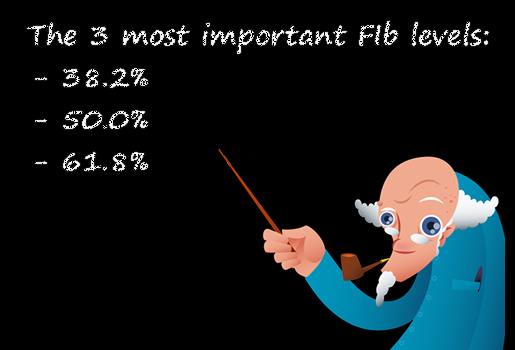
They key Fibonacci extension levels are the 38.2%, 50.0%, 61.8%, 100%, 138.2% and 161.8%.
Traders use the Fibonacci extension levels as potential support and resistance areas to set profit targets. Again, since so many traders are watching these levels and placing buy and sell orders to take profits, this tool tends to work due self-fulfilling expectations.
In order to apply Fibonacci levels to your charts, you'll need to identify Swing High and Swing Low points.
A Swing High is a candlestick with at least two lower highs on both the left and right of itself.
A Swing Low is a candlestick with at least two higher lows on both the left and right of itself.
Because many traders use the Fibonacci tool, those levels tend to become self-fulfilling support and resistance levels or areas of interest.
When using the Fibonacci tool, probability of success could increase when using the Fib tool with other support and resistance levels, trend lines, and candlestick patterns for spotting entry and stop loss points.
While you are logged into your account,
you can save your progress in the School of Pipsology!
- Fibonacci Who?
- Fibonacci Retracement
- When Fibonacci Fails
- Combining Fibs with Support and Resistance
- Combining Fibs with Trend Lines
- Combining Fibs with Candlesticks
- Fibonacci Extensions
- Placing Stops with Fibs
- Summary: Fibonacci